

Blog
How to Start a Streetwear Brand With a Sialkot Manufacturer: Your First Drop, Step by Step

If you want to start a streetwear brand with a Sialkot manufacturer, start with one product, one fabric, and one sample — not a full catalogue. Send a clear design or reference garment, agree on the fabric and GSM, approve a physical sample, and only then go to bulk. That order is what saves most first-time founders from paying for pieces they cannot sell.
Start with one product, not a whole range
Most first drops fail for a boring reason: too many styles, and too little money left for the sample, the photos, and the launch. Pick the piece you can actually sell first. For most streetwear founders, that is a hoodie, because fit, fabric weight, and print are all things a buyer can judge in a photo.
Before you message anyone, write down what piece you want, how many colours, what sizes, and what date you need it by. If you do not know the quantity yet, say so. A good factory will help you work backwards from your budget, not pressure you to order more.
Fabric first: GSM is not just a number
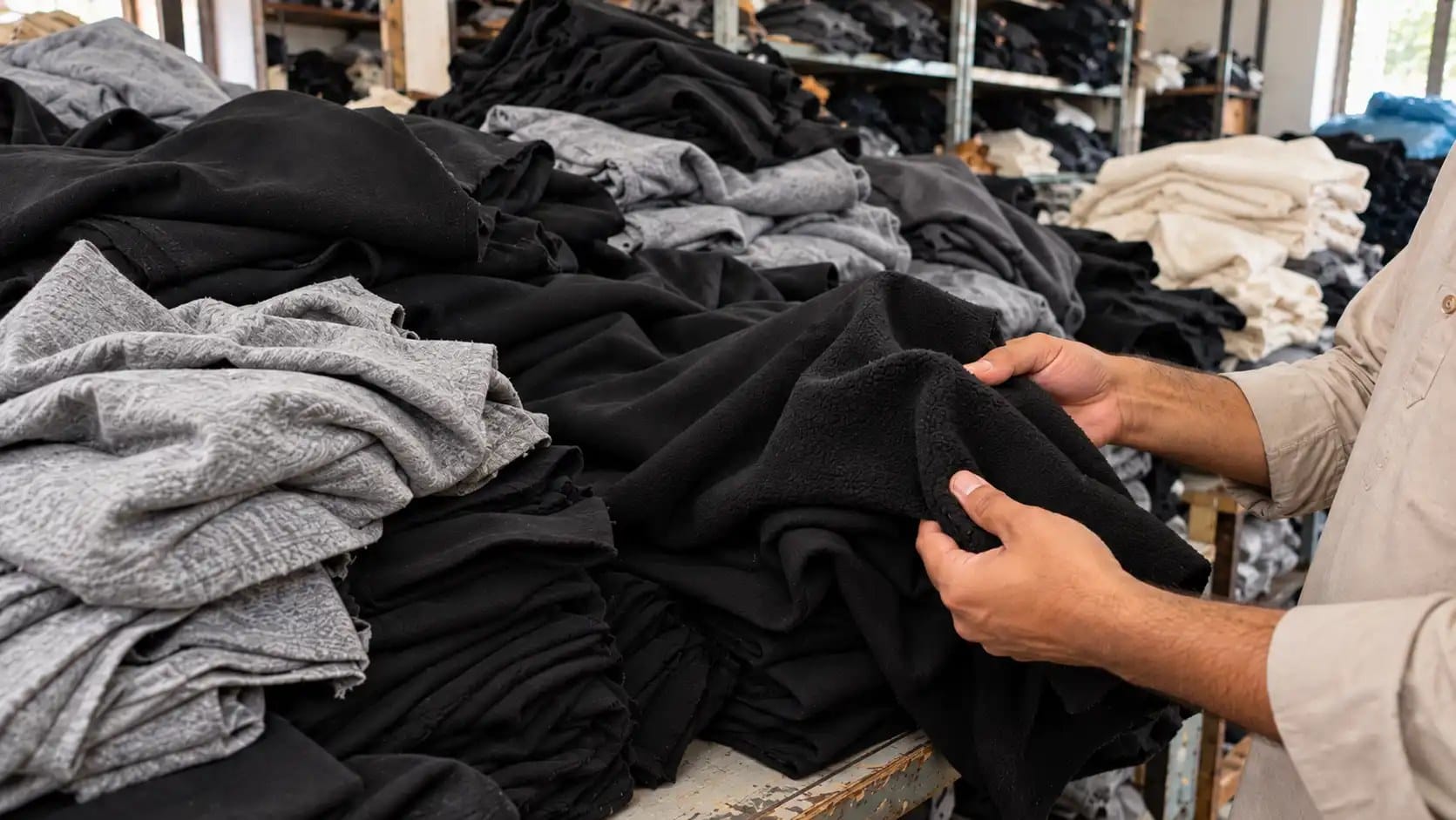
GSM is grams per square metre. It tells you how heavy and warm a fabric feels, and it changes the price, the drape, and how a print sits.
| Lightweight | 280–320 GSM | Spring drops, layering, a softer and less boxy hoodie |
| Midweight | 340–380 GSM | Most streetwear drops — warm enough to feel premium, without heavy freight cost |
| Heavyweight | 400–450 GSM | Thick, structured, boxy hoodies — higher fabric and shipping cost |
French terry is lighter and drapes better for an oversized fit. Fleece, with its brushed inside, is warmer and feels thicker in the hand. Do not choose by GSM alone. Ask for a swatch, wash it once at home, and check how it feels after it dries. That one test tells you more than a fabric catalogue.
From design to pattern: what a factory actually needs
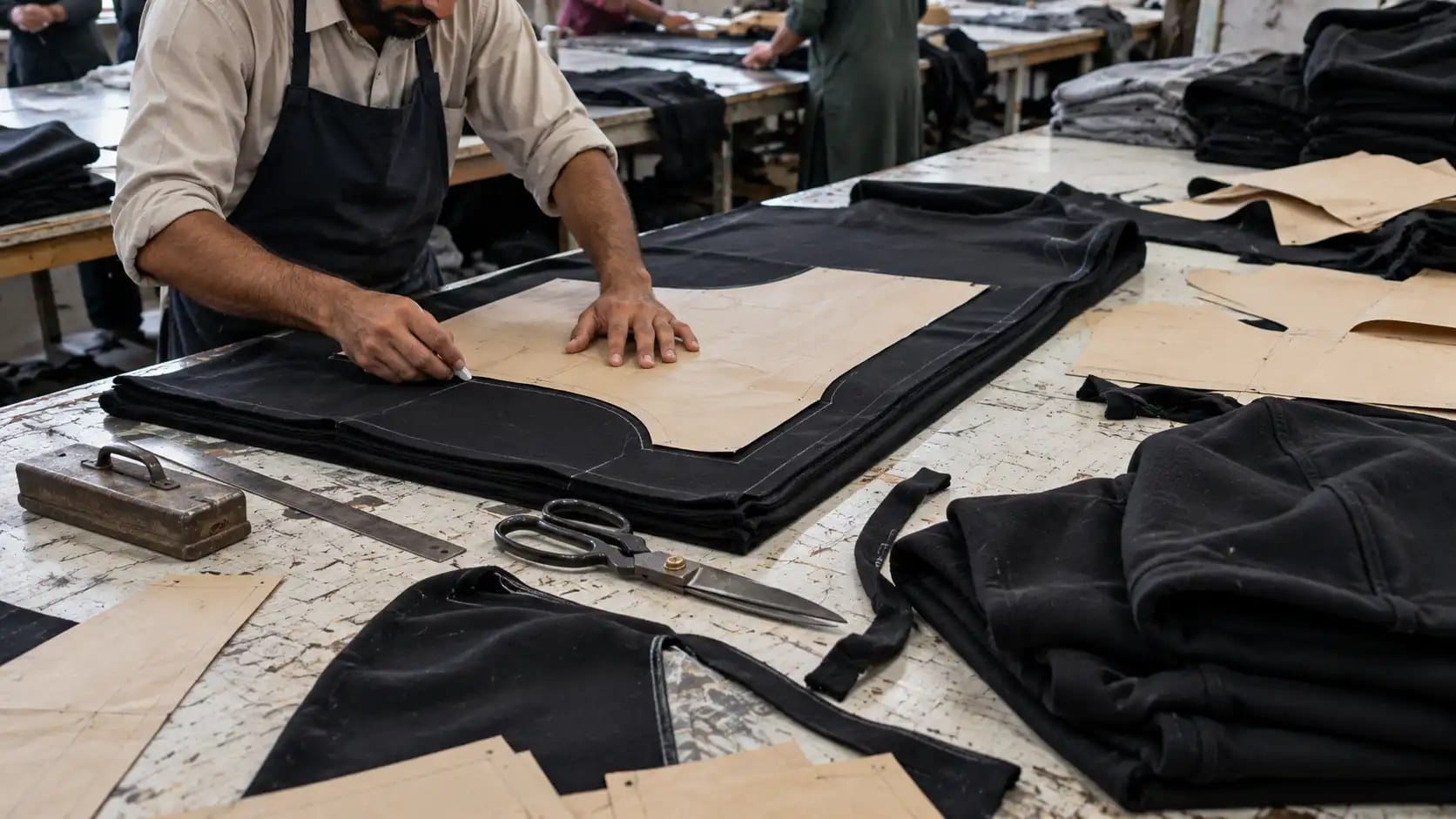
You do not need a perfect tech pack to start, but you do need something a cutter can work from. In order of usefulness, send a tech pack with flat sketches and graded measurements, a reference garment you already like, or clear front, back, and detail photos with your measurements written on them.
What usually causes delays is missing information, not a missing tech pack: no tolerance on measurements, no Pantone or colour reference, no placement for a logo, or a size chart for only one size. If your design is oversized, boxy, and drop-shoulder, say that in plain words and give the chest, length, and shoulder measurements for your sample size. The factory grades the rest from there.
Sewing: the details a buyer feels, even if they cannot name them
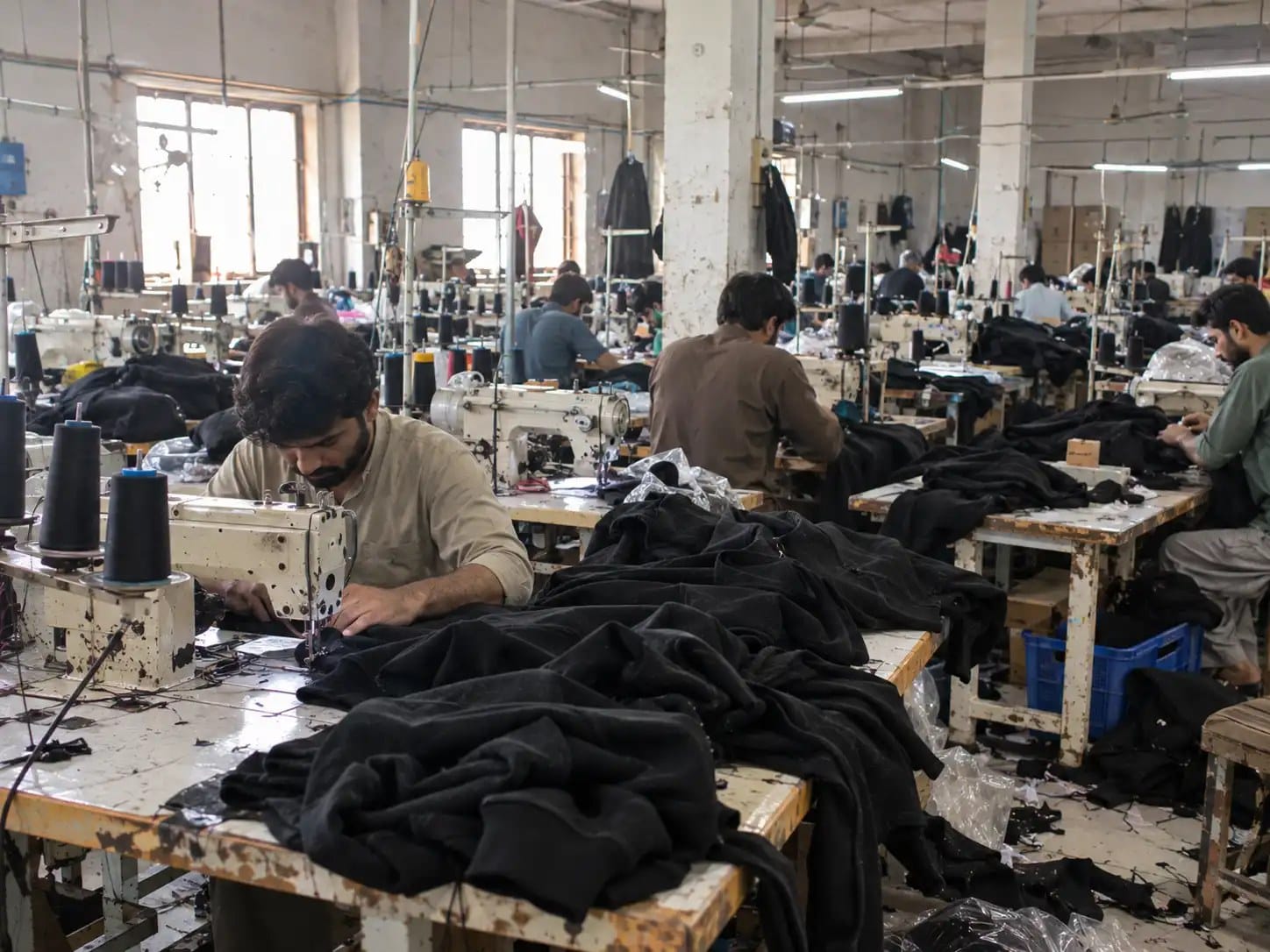
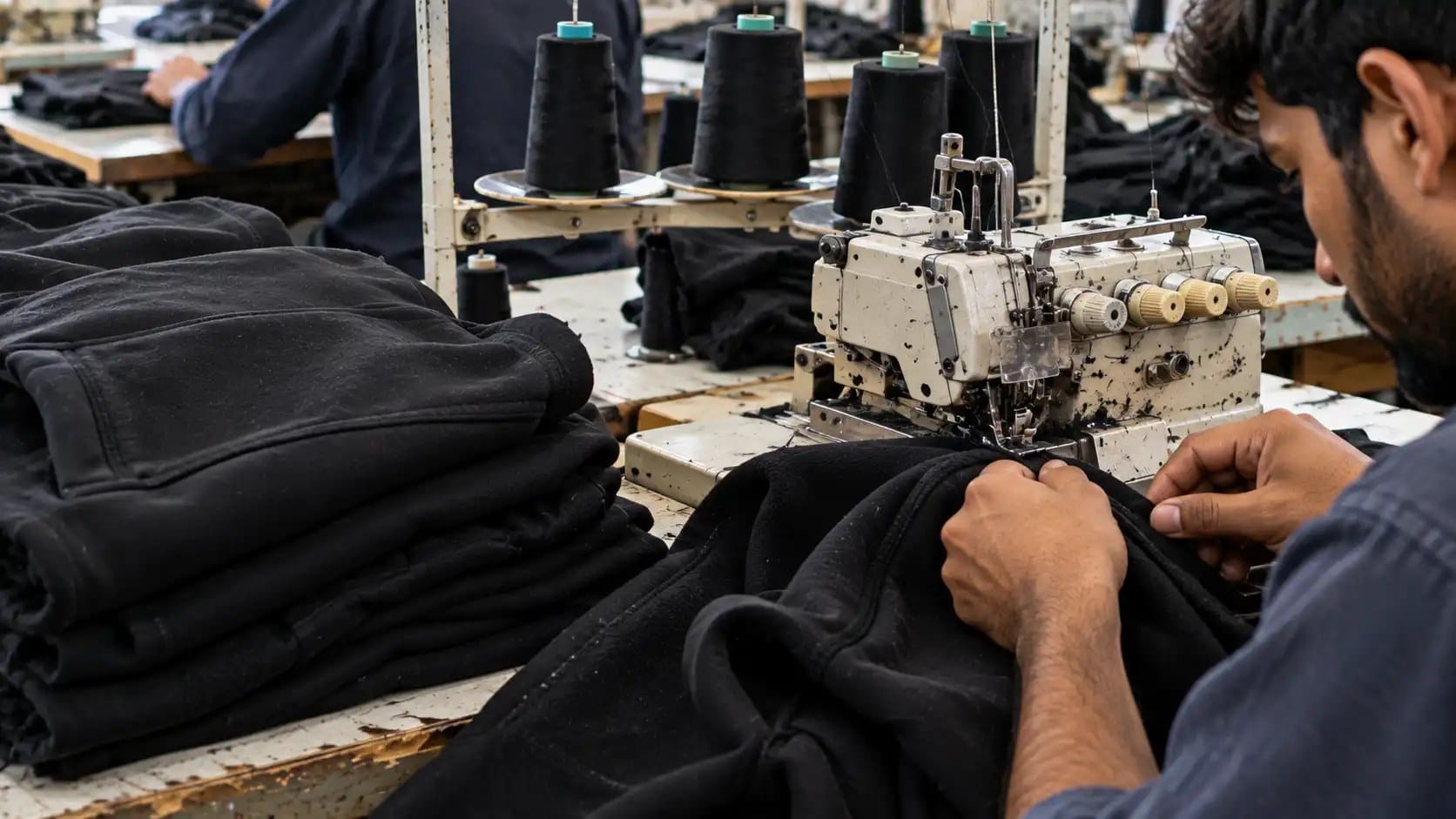
When you receive a sample, do not just look at the print. Check the seams, the ribbing at the cuffs and hem, whether the hood sits evenly, and whether the pocket is straight. Pull gently at a stress point — a pocket corner, a zip start — and see if the stitching holds.
That is the difference between a hoodie that looks good in a photo and one a customer keeps. A factory that welcomes that kind of check, and shows you in-line photos during production, is a better sign than a factory that only sends finished, styled photos at the end.
Sample before bulk: the step you must not skip
Order a physical sample first, even if it feels slow. At Adrees Enterprises, the sample fee is $100, and in most cases that fee is credited in full against your bulk order.
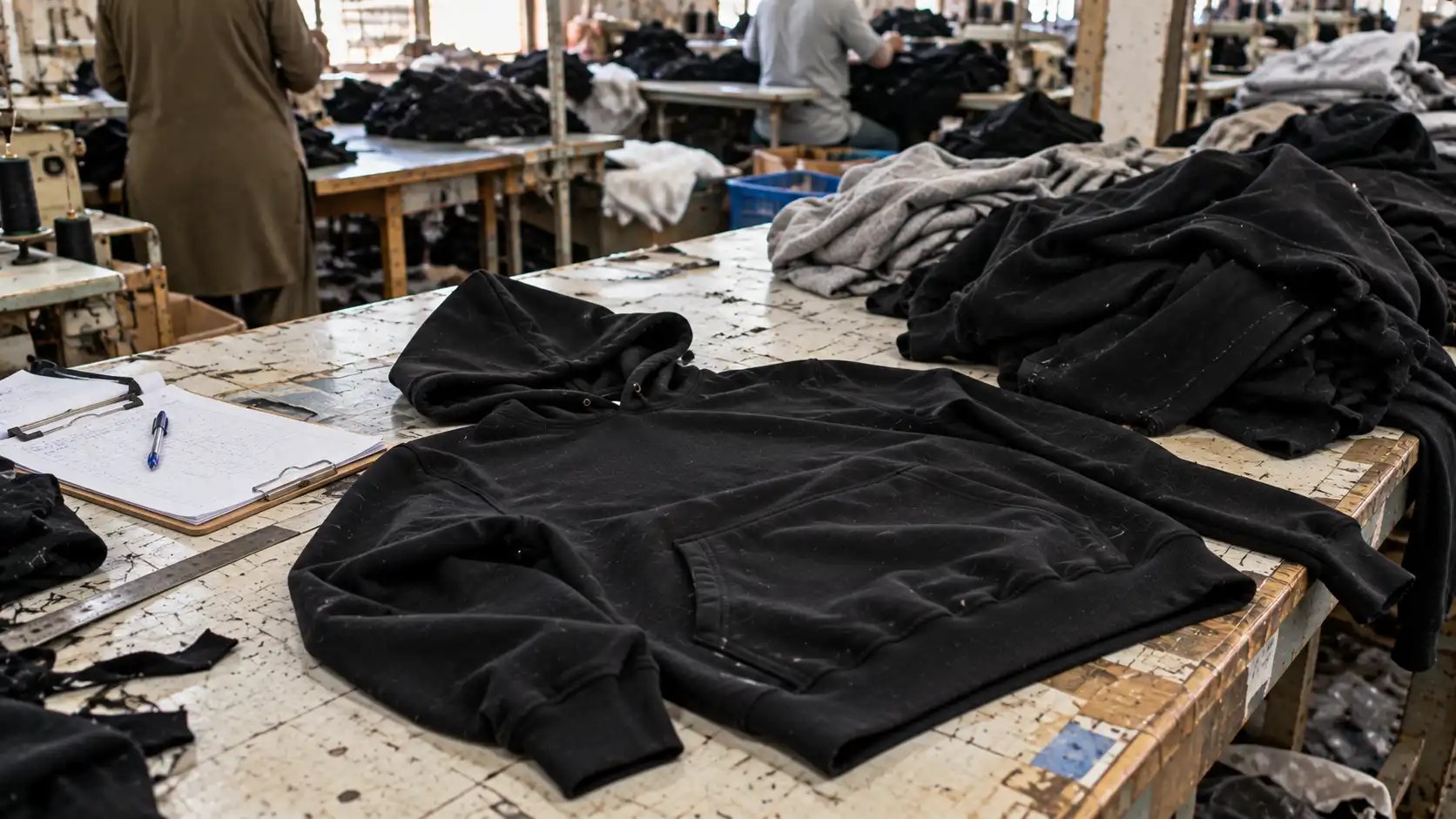
Check the sample against four things: fit against your size chart, fabric hand and weight, stitch quality, and decoration — print, puff, or embroidery — after a wash if you can. Most samples need a revision. Sample 1 is often about fit or fabric. Sample 2 is usually about small fixes: a print moved a centimetre, a drawstring changed, a colour corrected. Before you pay, confirm in your quote what the sample includes, how revisions are handled, and that bulk will use the same fabric as the approved sample. Sample timing is confirmed in your quote, because it depends on fabric availability and decoration — do not lock a launch date until your sample date is in writing.
Quality control: what to check, and what happens if it fails
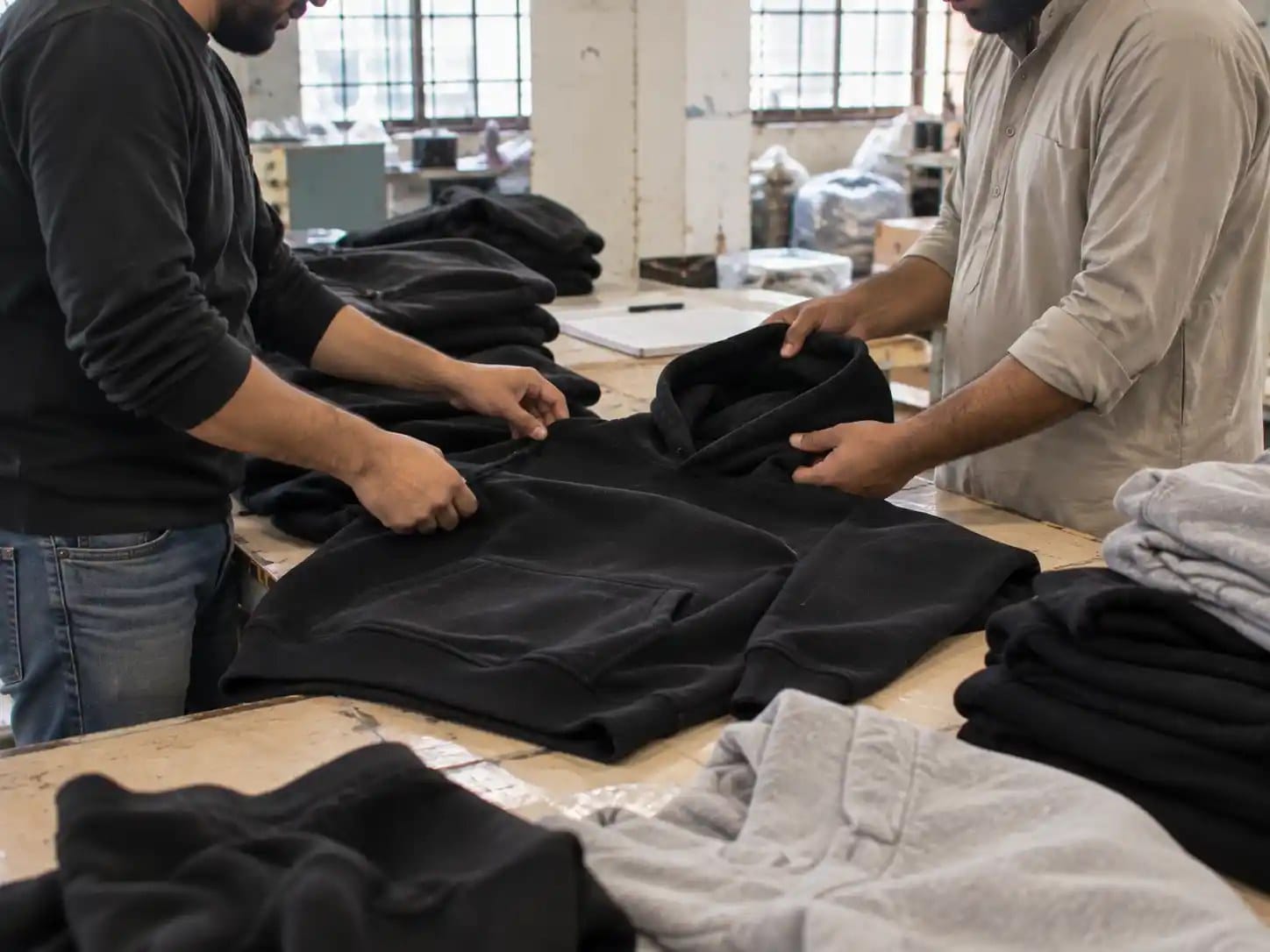
Before bulk ships, ask for a clear QC rule, not just “we check everything.” A useful rule covers fabric on arrival, checks during sewing, a final check on finished pieces, and what happens if a batch fails — who pays for rework, how long a remake takes, and whether shipment is held until a third-party inspection passes, if you arrange one through SGS, Intertek, QIMA, or Bureau Veritas.
Keep your approved sample as the benchmark. If bulk does not match it in fabric, fit, or colour, that is a conversation to have before it leaves Pakistan, not after it arrives at your door.
Decoration: screen, puff, embroidery, or sublimation?
| Screen print | Bold, simple designs; cheaper per piece at volume | Less suited to very fine detail and gradients |
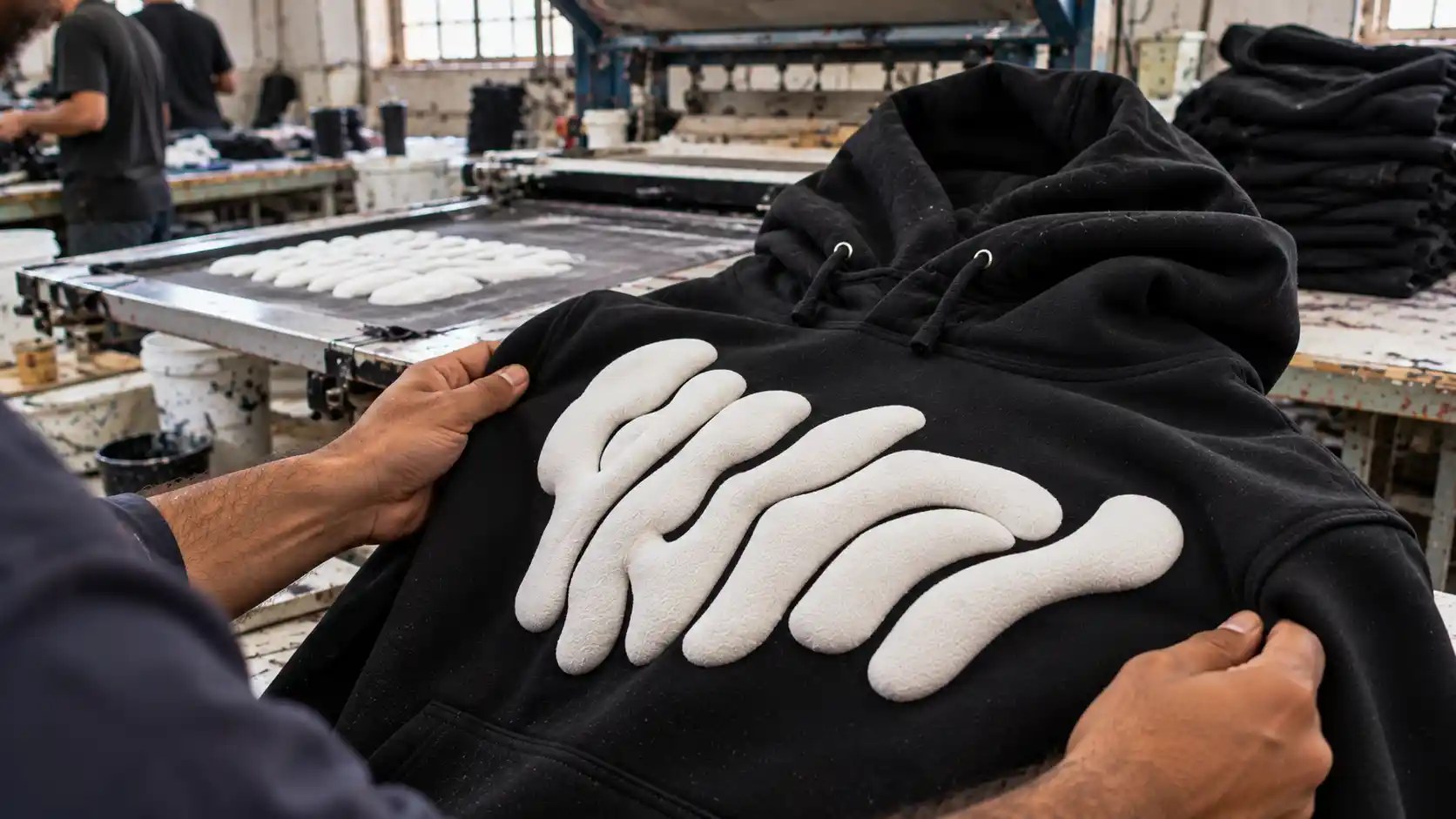
| Puff print | Raised, premium streetwear texture | Costs more, takes longer, needs a simplified design |
| Embroidery | Small logos and a premium feel | Usually priced by stitch count |
| Sublimation | Full-colour, all-over prints on light polyester | Does not work on cotton fleece hoodies |
Choose by artwork, fabric, and quantity, not by what looks trendiest that week. Adrees Enterprises offers screen printing, DTF, DTG, sublimation, embroidery, and rubber printing, so the method can be matched to your design rather than forced onto it.
How many pieces for a first drop?
At Adrees Enterprises, the minimum order is 50 pieces per design. That is the number to plan around. Tell us your size breakdown when you enquire, and we will confirm how those 50 are split across sizes in your quote.
A first drop of one hoodie in two colours is a realistic test. It lets you see what actually sells before you commit to a tracksuit, a tee, and a cap in the same order.
Payment and lead time, in plain terms
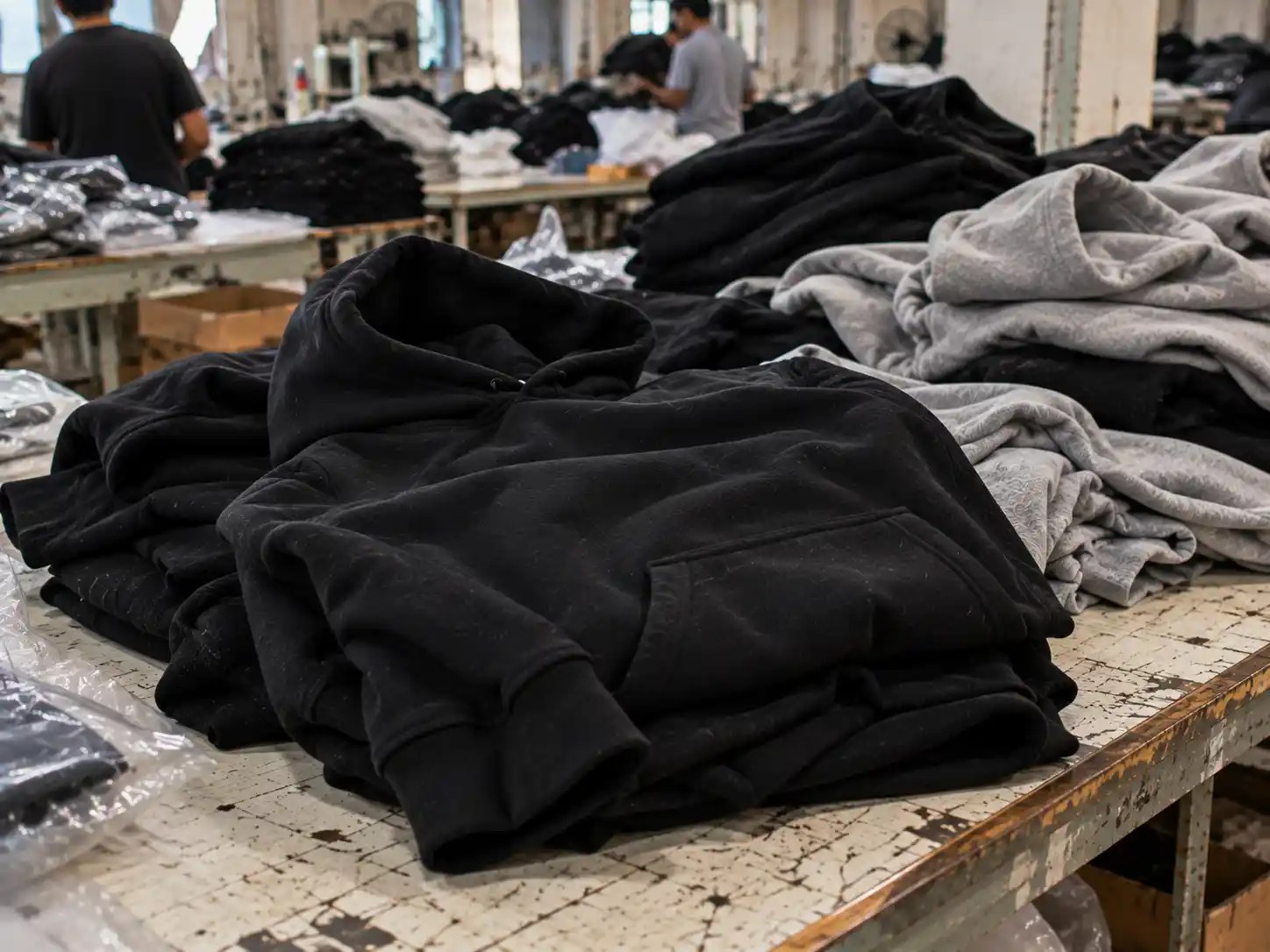
Bulk payment is typically 50% in advance to start production, and 50% before shipping. Payment methods include bank transfer, PayPal, Wise, Remitly, Western Union, Payoneer, and credit/debit cards, as listed on the Adrees Enterprises FAQ page.
For timing, bulk production is 15–18 business days, as stated on the Adrees Enterprises FAQ page. Normal shipping is 3–5 working days, and economy shipping is 8–10 working days.
DDP shipping: what “landed cost” really means
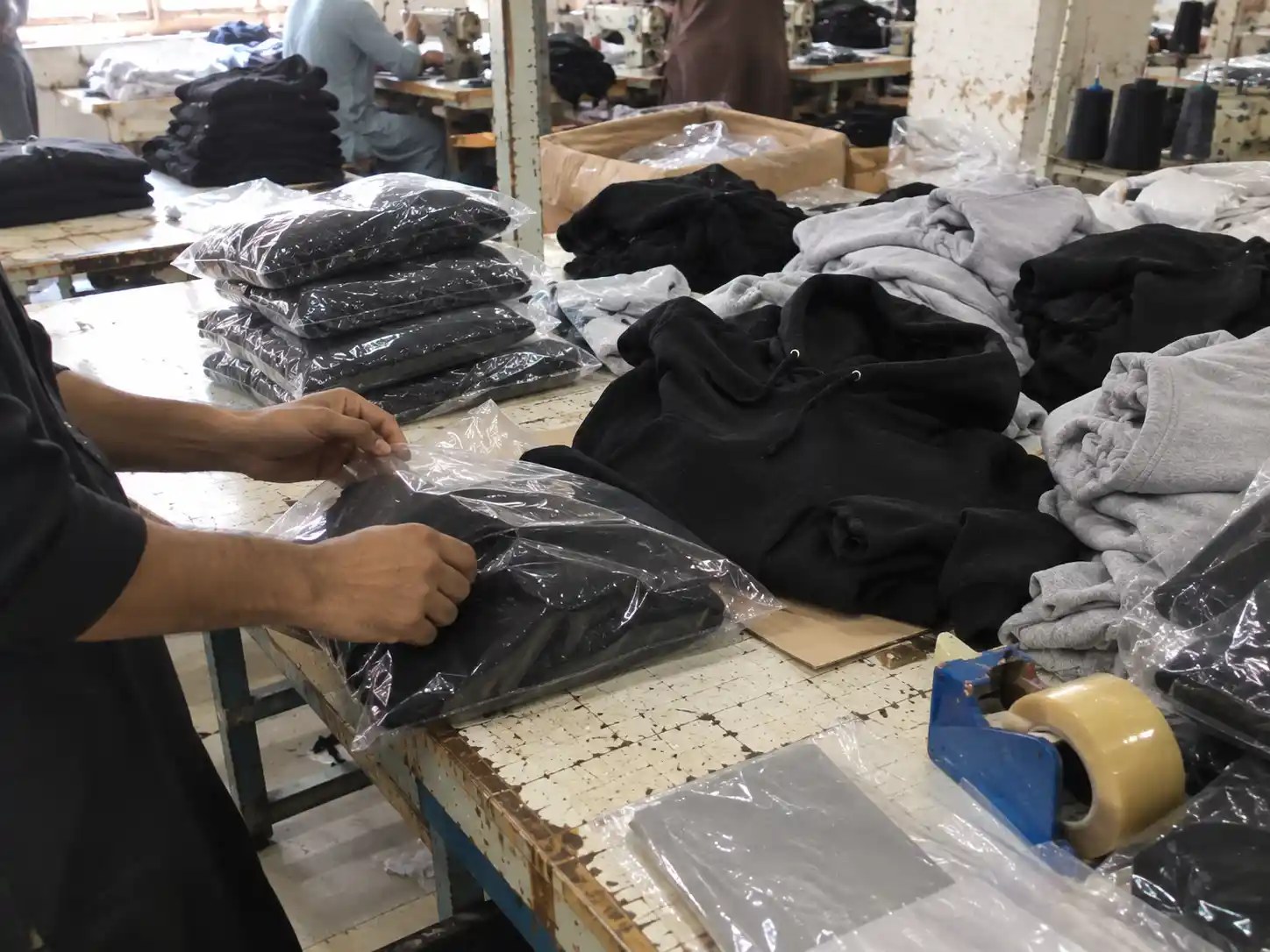
DDP, Delivered Duty Paid, means the seller arranges delivery to your door with duties and taxes cleared before arrival. DAP, and the older term DDU, mean you pay duties on arrival. That one letter changes your final cost, so ask for it in writing: what is included, air or sea, and to which port or warehouse.
Air is faster and better for samples and small first orders. Sea is cheaper per piece for larger orders, but takes weeks and needs a port plan. Ask for a worked landed-cost example for your quantity and destination, not just a product price. Product price alone is not your cost.
How to vet a factory, including us
Before you pay a deposit, check these points. If a factory invites those checks, that is a good sign. If it dodges them, no low price makes up for it.
- A real, verifiable address and registration.
- A domain email and company bank account — not just WhatsApp and a personal account.
- A live video walkthrough if you cannot visit.
- A physical sample before bulk.
- A willingness to allow third-party inspection.
Walk away from 100% upfront with no sample or production visibility, a MOQ that jumps after the quote, or a refusal to put price, timelines, payment, and quality standards in writing.
Adrees Enterprises is registered with the Sialkot Chamber of Commerce and Industry (SCCI) and with Pakistan’s Federal Board of Revenue (FBR).
What does it cost?
Price depends on fabric and GSM, decoration method and coverage, trims and labels, packaging, quantity, and shipping mode. Your quote should be itemised — garment, decoration, labels, packaging, and shipping separately — with what is excluded stated clearly. Share your order quantity and details, and Adrees Enterprises will return a discounted price chart for bulk, rather than a single flat rate that hides those variables.
Frequently asked questions
Do I need a tech pack?
No, but you need a reference garment or clear measurements, a colour reference, and decoration placements. A tech pack just makes it faster and more accurate.
What is the minimum order?
50 pieces per design.
How much is a sample, and is it credited?
$100, credited in full against your bulk order in most cases.
How long does bulk production take?
15–18 business days, plus 3–5 working days for normal shipping, or 8–10 working days for economy shipping.
Can I visit or get a video tour?
Ask for a live walkthrough before you commit to bulk, and check that what you see matches the address and registration given.
What should I send for a quote?
Your design or reference photos, product, quantity, fabric/GSM if known, decoration, target date, and your country. A tech pack or sketch file helps, but a clear message is enough to start.
Ready to start your first drop?
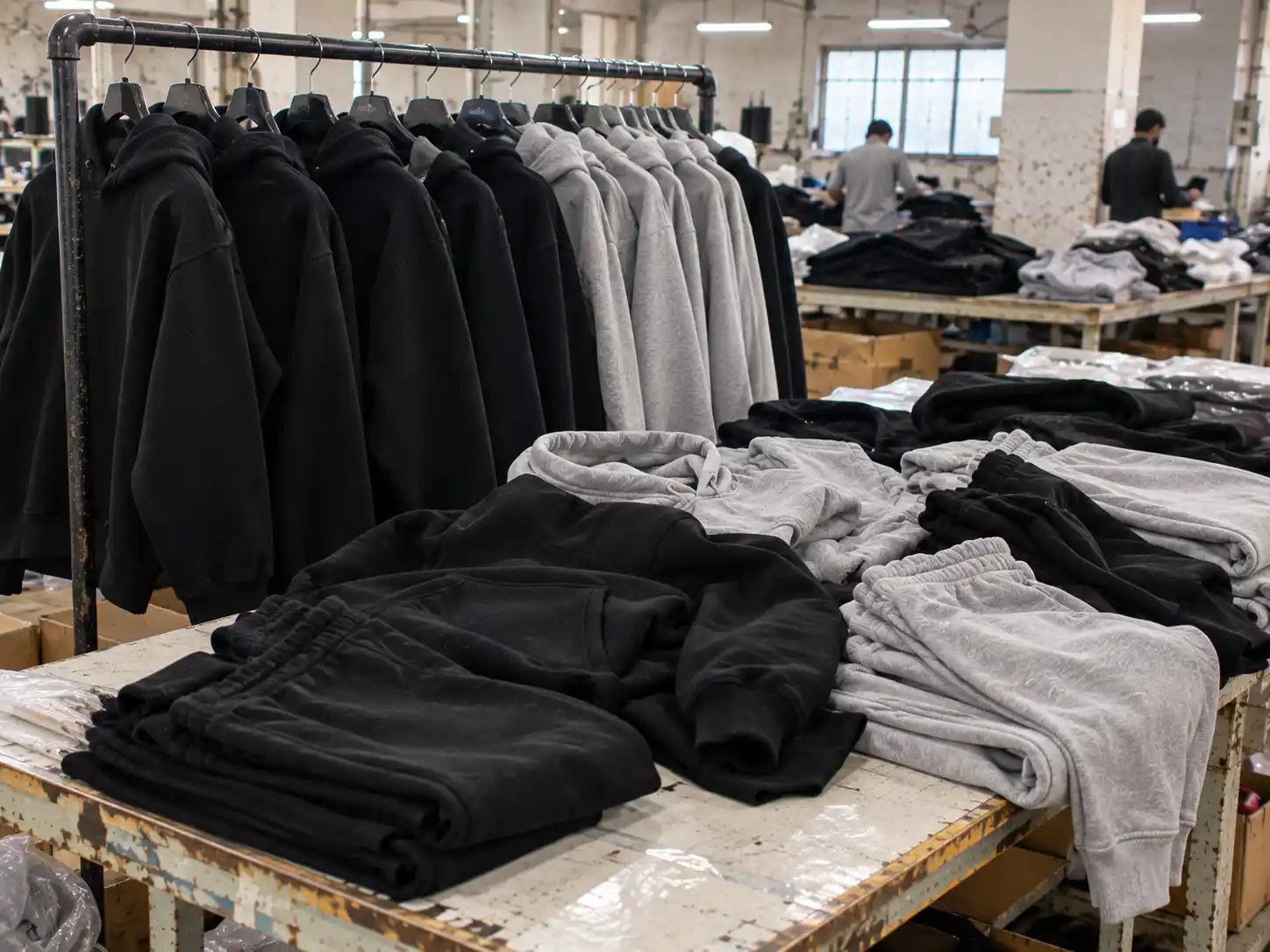
Send Adrees Enterprises your design, quantity, fabric/GSM if you know it, decoration, and target date, via WhatsApp on +92 329 775 0677 or via the contact page at adreesenterprises.com/contact-us/. Tell us what your first drop is meant to test, and we will tell you honestly if the fabric, decoration, or quantity fits — including when it does not.
What to send for a quote — copy this checklist into your first message:
- Design file, sketch, or reference photos
- Product (for example, hoodie, tee, tracksuit)
- Quantity — minimum 50 pieces per design
- Fabric and GSM, if you know them
- Decoration: screen print, puff print, embroidery, DTF, DTG, sublimation, or rubber print
- Target date and your country for shipping
