


Blog
Can Clothing Factories in Asia Handle Small & Large Production Runs? (Complete 2026 Guide)

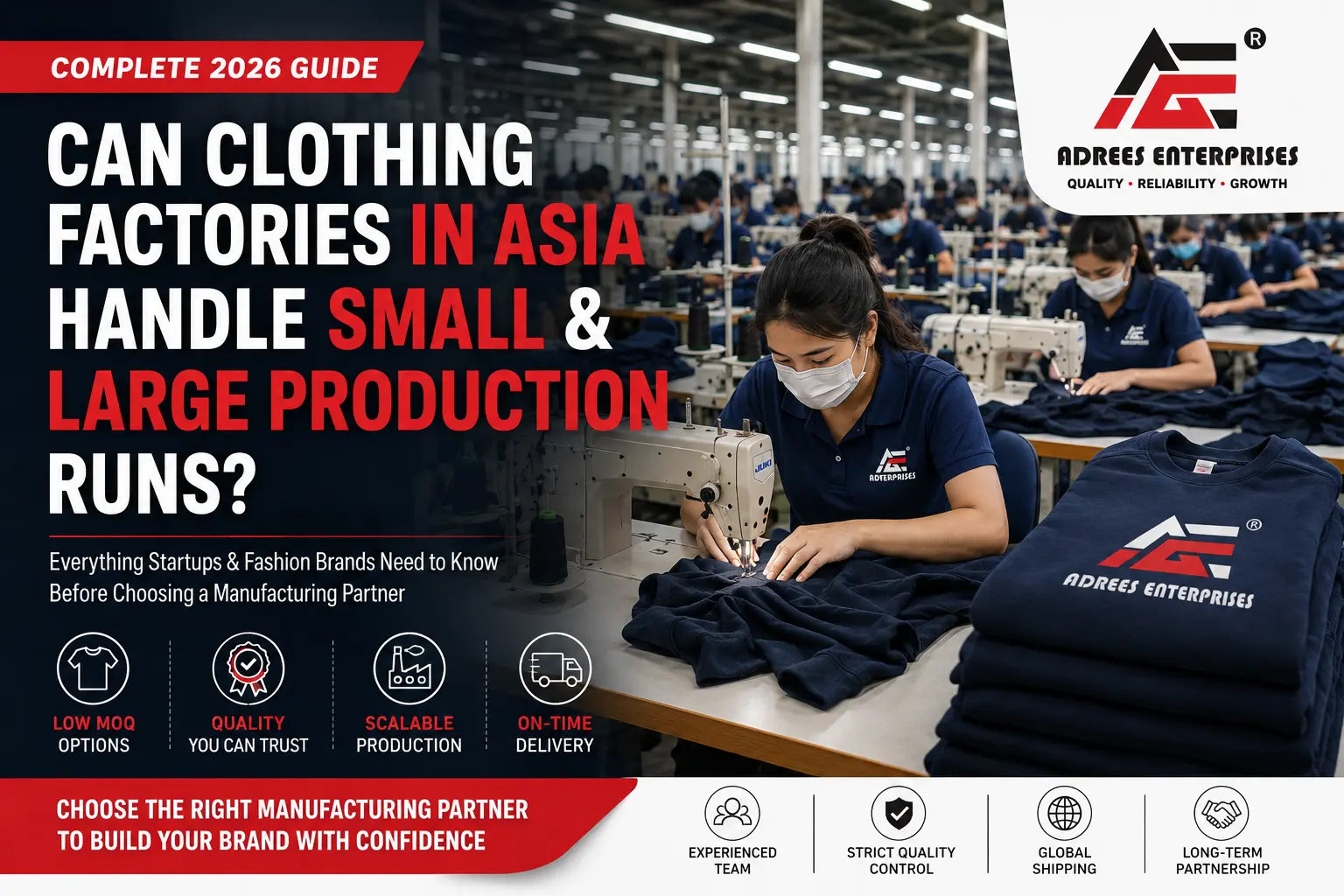
Short answer: Yes—but the factory matters far more than the country.
When people think about clothing manufacturing in Asia, they often imagine huge factories producing tens of thousands of garments every day. While that certainly exists, it’s only one part of the picture.
Across countries like Pakistan, China, Vietnam, Bangladesh, Turkey, and India, you’ll find manufacturers of every size—from small specialist workshops to fully integrated export facilities capable of producing large commercial orders.
The real question isn’t: “Can factories in Asia handle small and large production runs?” The better question is: “Can this specific factory grow with my brand?”
That’s the question every clothing brand should be asking.
After years of working with startup brands, fashion entrepreneurs, and established labels at Adrees Enterprises, we’ve learned that successful manufacturing relationships are rarely built on price alone. They’re built on communication, consistency, transparency, and the ability to adapt as a brand evolves.
Whether you’re producing your first 20 pieces or preparing a seasonal collection of several thousand garments, choosing the right manufacturing partner will have a direct impact on your product quality, customer satisfaction, and long-term profitability.
This guide explains what really matters when evaluating a clothing factory in Asia and how to make a confident decision.
Why Asia Continues to Lead Global Apparel Manufacturing
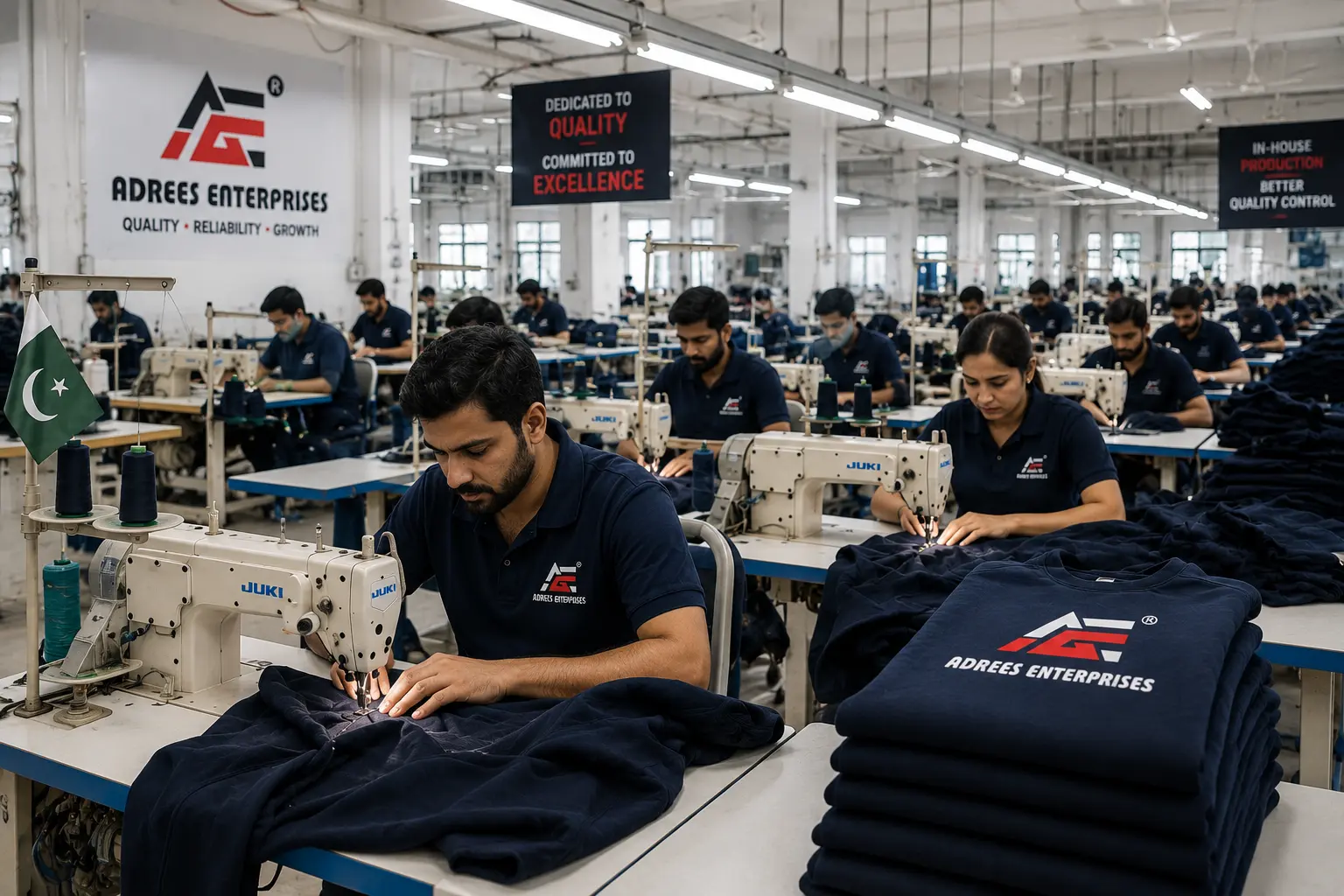
Asia has become the world’s largest apparel manufacturing region for several reasons. The region combines experienced craftsmanship, advanced production facilities, established textile supply chains, and competitive production costs. Countries such as Pakistan, China, Vietnam, Bangladesh, and Turkey each bring different strengths depending on the product category, order size, and technical requirements.
However, one common misconception is that every Asian factory works the same way. That simply isn’t true. Some factories focus exclusively on mass production. Others specialize in premium private-label manufacturing. Many work with startup brands launching their first collection before gradually scaling into larger production volumes.
In other words, Asia offers options—not a single manufacturing model.
The Biggest Myth About Clothing Manufacturing
One misconception we hear frequently is: “Professional factories only accept huge orders.” We understand why many first-time founders believe this. Launching a clothing brand can feel overwhelming, and it’s easy to assume manufacturers only want large customers.
In reality, that’s changing. Many modern manufacturers recognize that today’s startup could become tomorrow’s established brand. At Adrees Enterprises, we’ve worked with entrepreneurs who started with relatively small production runs to validate their ideas before expanding into larger collections.
From our experience, brands that scale successfully don’t usually begin with the largest orders. They begin with the smartest ones.
Small Production Runs vs Large Production Runs
Although both involve manufacturing garments, they’re very different from an operational perspective.
Small Production Runs
Small production runs are commonly chosen by new clothing brands, fashion startups, influencer merchandise, limited-edition collections, market testing, and seasonal capsule launches.
The biggest advantage is flexibility. Instead of investing heavily before understanding customer demand, brands can test products, collect feedback, and improve future collections.
Large Production Runs
Larger production runs are typically used by established fashion brands, retail chains, wholesale businesses, sportswear companies, and corporate uniform suppliers.
Larger quantities usually reduce the cost per garment because production becomes more efficient. However, they also require stronger inventory planning, larger budgets, and greater confidence in market demand.
Neither approach is inherently better. The right choice depends on where your business is today—and where you expect it to be in the next 12 to 24 months.
What Actually Determines Whether a Factory Can Handle Both?
One of the biggest mistakes buyers make is judging a manufacturer based only on their website or product photos. A reliable clothing manufacturer should demonstrate operational capability, not just marketing.
Here are some of the questions we encourage brands to ask before making a decision:
Can production capacity increase as my brand grows?
Are cutting, stitching, printing, and finishing handled in-house or outsourced?
How is quality checked before shipment?
How are production delays communicated?
Can they support both repeat orders and custom projects?
What branding services are available?
How are samples developed before bulk production?
Can they recommend the right printing method for my design?
How do they manage revisions during sampling?
Interestingly, these conversations often reveal much more about a factory than the quotation itself.
How to Evaluate a Clothing Manufacturer Like an Experienced Sourcing Manager
One question I often encourage new clothing brands to ask themselves is this: “If I didn’t know the quoted price, would I still choose this manufacturer?”
It’s a simple question, but it changes how you evaluate suppliers. Experienced sourcing managers rarely choose a factory because it offers the lowest quotation. Instead, they look at the overall picture—because once production starts, factors like communication, consistency, and quality usually have a much bigger impact on the success of an order than saving a small amount per garment.
1. Do They Specialize in Your Product?
Not every factory is good at everything. Some manufacturers specialize in knitwear, while others focus on woven garments, sportswear, denim, or outerwear. Ask to see examples of products similar to yours rather than a general portfolio, and look for fabric quality, stitch consistency, print sharpness, embroidery precision, fit and finishing, and packaging quality.
A manufacturer with category-specific experience is often able to identify potential production issues before they become expensive mistakes.
2. Communication Often Predicts Production Quality
In our experience, the way a manufacturer communicates before production usually reflects how they’ll communicate during production.
Do they answer questions clearly?
Do they explain lead times honestly?
Do they ask about your target market, fabric preferences, and branding requirements?
Or do they simply reply with “Yes, we can do everything.”
Professional manufacturers usually ask more questions than their customers. That’s because they’re trying to understand your project properly before committing to production.
3. Sampling Is Where Trust Begins
Never underestimate the value of a sample. A sample isn’t just about checking whether a hoodie looks nice. It’s your opportunity to evaluate how a manufacturer works. When reviewing a sample, check fabric quality, stitching, measurements, printing or embroidery, labels and branding, and overall finishing.
Many experienced buyers won’t place a bulk order until the sample has been thoroughly reviewed and approved. While sampling adds time, it often saves significant time and cost later by identifying issues before full production begins.
4. Quality Control Should Never Be an Afterthought
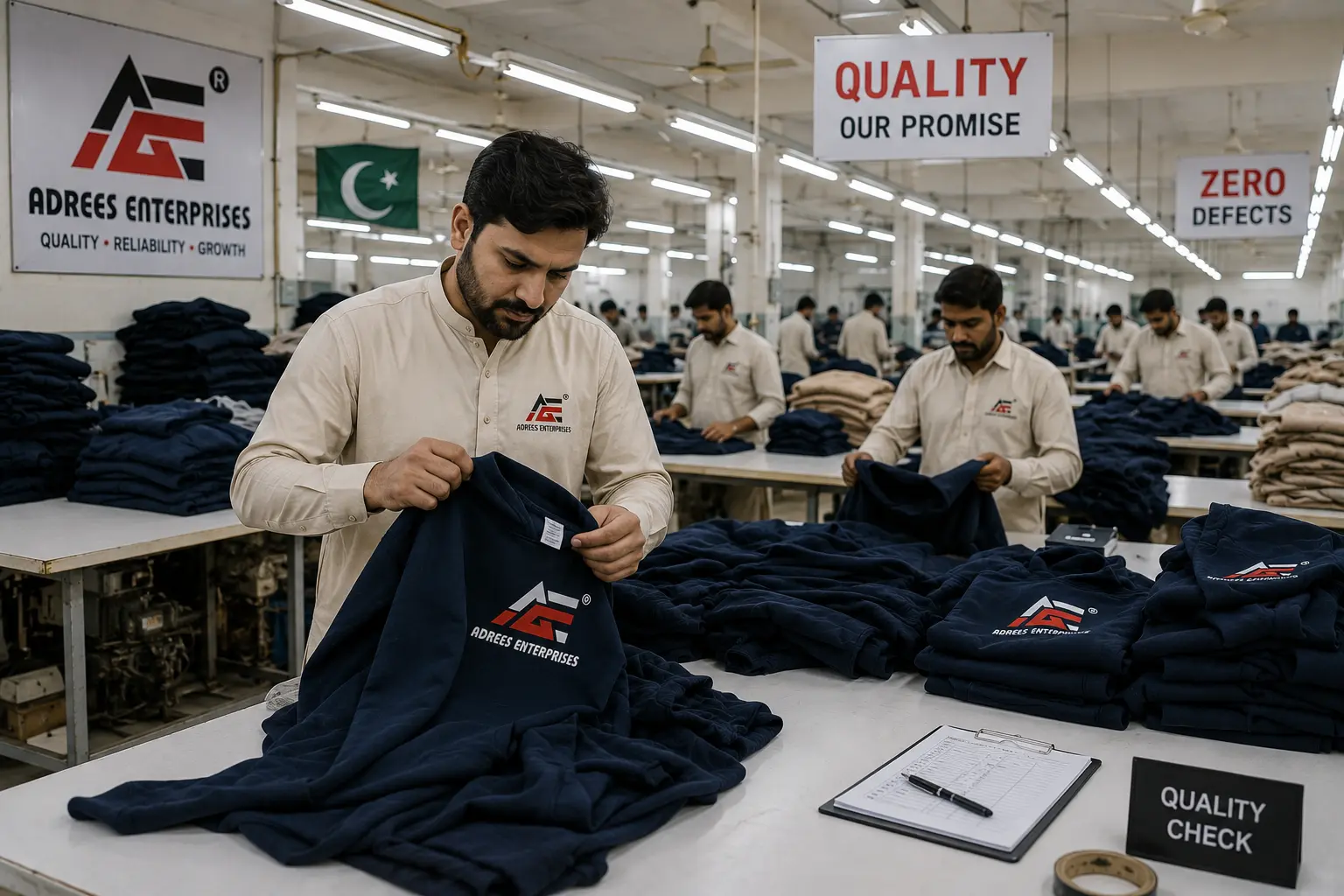
Quality control isn’t something that happens only at the end of production. The strongest manufacturers build quality checks throughout the manufacturing process.
A typical quality control workflow includes: Raw Material Inspection (checking fabrics, trims, labels, and accessories before production starts), In-Process Inspection (monitoring stitching quality during sewing), Printing & Embroidery Inspection (ensuring logo placement and colors match approved samples), and Final Inspection (reviewing completed garments for defects, loose threads, and measurement tolerances before shipment).
The goal isn’t perfection—it’s consistency. Reliable manufacturers usually have documented quality control procedures because consistency is what keeps customers coming back.
5. Can the Factory Scale as Your Brand Grows?
Imagine this scenario: You launch your first collection. It sells out. Your next release needs five times more units. Can your manufacturer keep up? This is one of the most overlooked questions in apparel sourcing.
Choosing a factory that can support your future growth means you won’t need to start your supplier search from scratch every time demand increases. At Adrees Enterprises, we’ve had conversations with founders who initially planned very small production runs. As their brands grew, the biggest advantage wasn’t simply having a manufacturer—it was already having someone who understood their products and quality expectations.
6. Don’t Judge a Manufacturer by Price Alone
Every clothing brand wants competitive pricing. That’s completely understandable. However, experienced buyers know that the cheapest quotation isn’t always the lowest overall cost. A low initial price can become expensive if it results in multiple sample revisions, production delays, high defect rates, customer returns, reprinting, or missed product launches.
Instead of asking “Who is the cheapest?” try asking “Who offers the best long-term value for my brand?” That small shift in thinking often leads to much stronger supplier relationships and better business outcomes.
Choosing the Right Printing Method Can Make or Break Your Collection
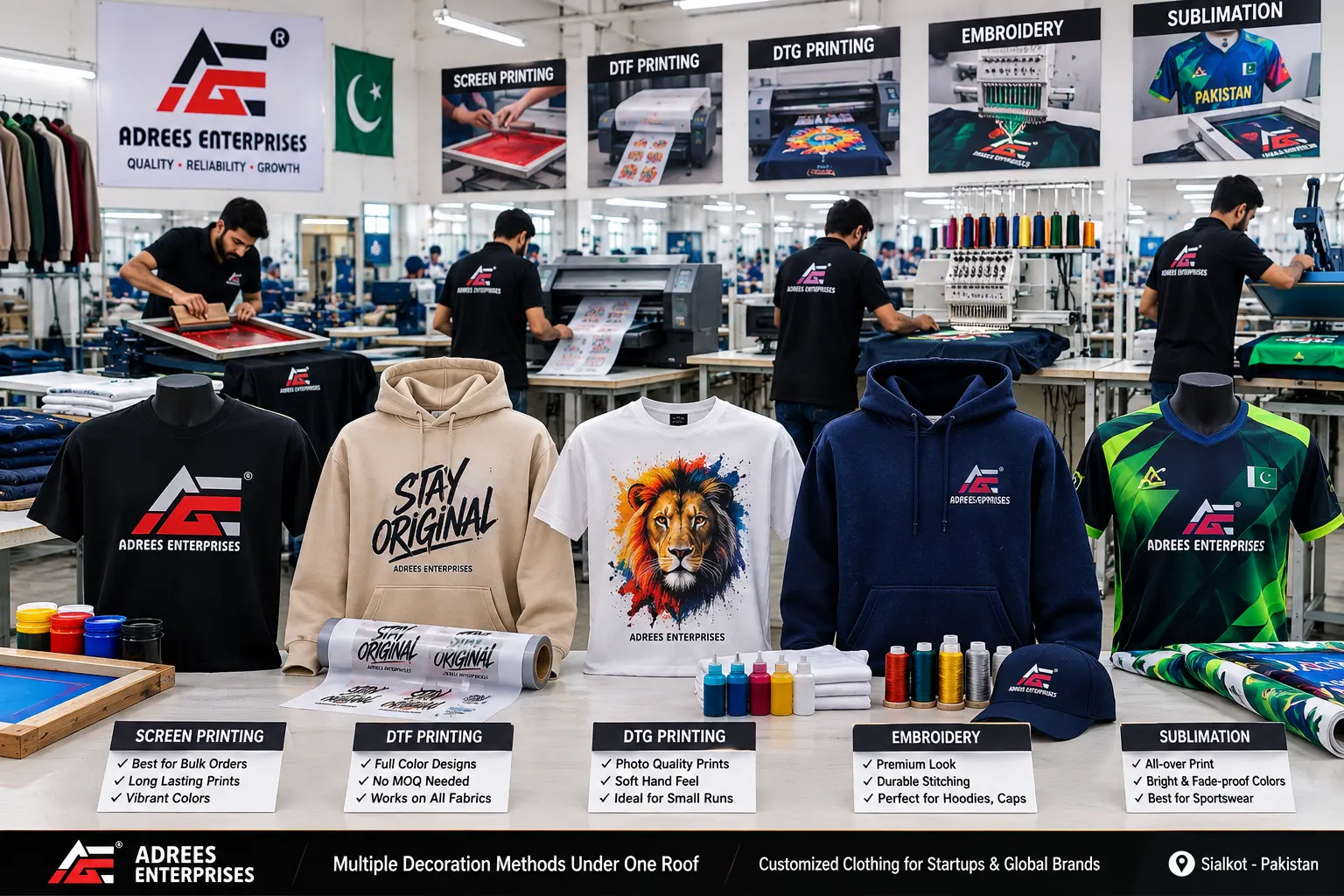
Many new clothing brands spend weeks perfecting their logo and selecting fabrics, yet give very little thought to how the design will actually be applied to the garment. When you’re starting a brand, terms like DTF, DTG, screen printing, or sublimation can feel technical and overwhelming.
The truth is, there isn’t one printing method that’s best for every project. The right choice depends on the type of fabric, your artwork, order quantity, budget, the look and feel you want, and how customers will use the garment.
Screen Printing: The Industry Standard for Bulk Orders
If you’ve ever purchased branded merchandise, sports apparel, or a large clothing collection, chances are it was screen printed. Why? Because screen printing becomes extremely cost-effective when you’re producing larger quantities of the same design. Each color requires its own screen, so there are setup costs, but once production begins, the cost per garment drops significantly.
Best for: Large production runs, streetwear graphics, corporate apparel, sports uniforms, bold logo designs, and long-term repeat orders.
Advantages: Excellent durability, vibrant colors, lower unit cost on larger orders, and professional finish. Things to consider: Screen printing isn’t always the most economical option for very small orders because of the preparation required before production starts.
DTF Printing (Direct-to-Film)
DTF has become one of the most versatile decoration methods. Instead of printing directly onto the garment, the design is printed onto a special transfer film and then heat applied to the fabric. One reason many startups appreciate DTF is its flexibility. It works well on a wide variety of fabrics and doesn’t require the same setup process as screen printing.
Best for: Startup clothing brands, low to medium quantities, multi-color artwork, cotton blends, polyester blends, and detailed graphics. Advantages: Full-color designs, works on multiple fabric types, fast production, and no screen setup.
DTG (Direct-to-Garment)
Think of DTG as an inkjet printer designed specifically for garments. Instead of transferring ink from a film, DTG prints directly onto the fabric. This makes it an excellent choice for highly detailed artwork, gradients, and photographic designs on cotton garments.
Best for: Cotton garments, photo-quality artwork, small orders, sample development, and complex illustrations. Advantages: Soft print feel, unlimited colors, excellent detail, and no setup cost. Things to consider: DTG generally performs best on high-cotton-content fabrics rather than polyester.
Sublimation Printing
Sublimation is completely different from other decoration methods. Rather than sitting on top of the fabric, the ink becomes part of the polyester fibers during the heat-transfer process. That’s why sublimated sportswear often feels incredibly smooth.
Best for: Sportswear, team uniforms, cycling jerseys, running apparel, performance clothing, and all-over prints. Advantages: Extremely durable, lightweight feel, doesn’t crack or peel, and bright colors. Things to consider: Sublimation works best on white or light-colored polyester garments and isn’t suitable for most cotton products.
Embroidery: When You Want a Premium Look
Some logos simply look better embroidered. Embroidery adds texture, depth, and a premium appearance that printing can’t always replicate. It’s commonly used on hoodies, sweatshirts, polo shirts, caps, jackets, beanies, and corporate uniforms.
For brands aiming to position themselves in the premium market, embroidery can significantly enhance perceived value. Many apparel decoration guides recommend it for logos and branding where durability and a high-end finish are priorities.
Which Printing Method Should You Choose?
One question we’re asked quite often is “What’s the best printing method?” Our answer is usually another question: “Tell us more about your product.” Because choosing the right decoration method depends on the bigger picture. A heavyweight cotton hoodie for a premium streetwear drop has different requirements than a polyester running jersey or a promotional event T-shirt.
Experienced manufacturers usually ask about fabric composition, order quantity, artwork complexity, target customer, budget, expected retail price, and intended use. These details help determine the most suitable production method instead of relying on a one-size-fits-all recommendation.
Private Label Branding: The Details Customers Remember
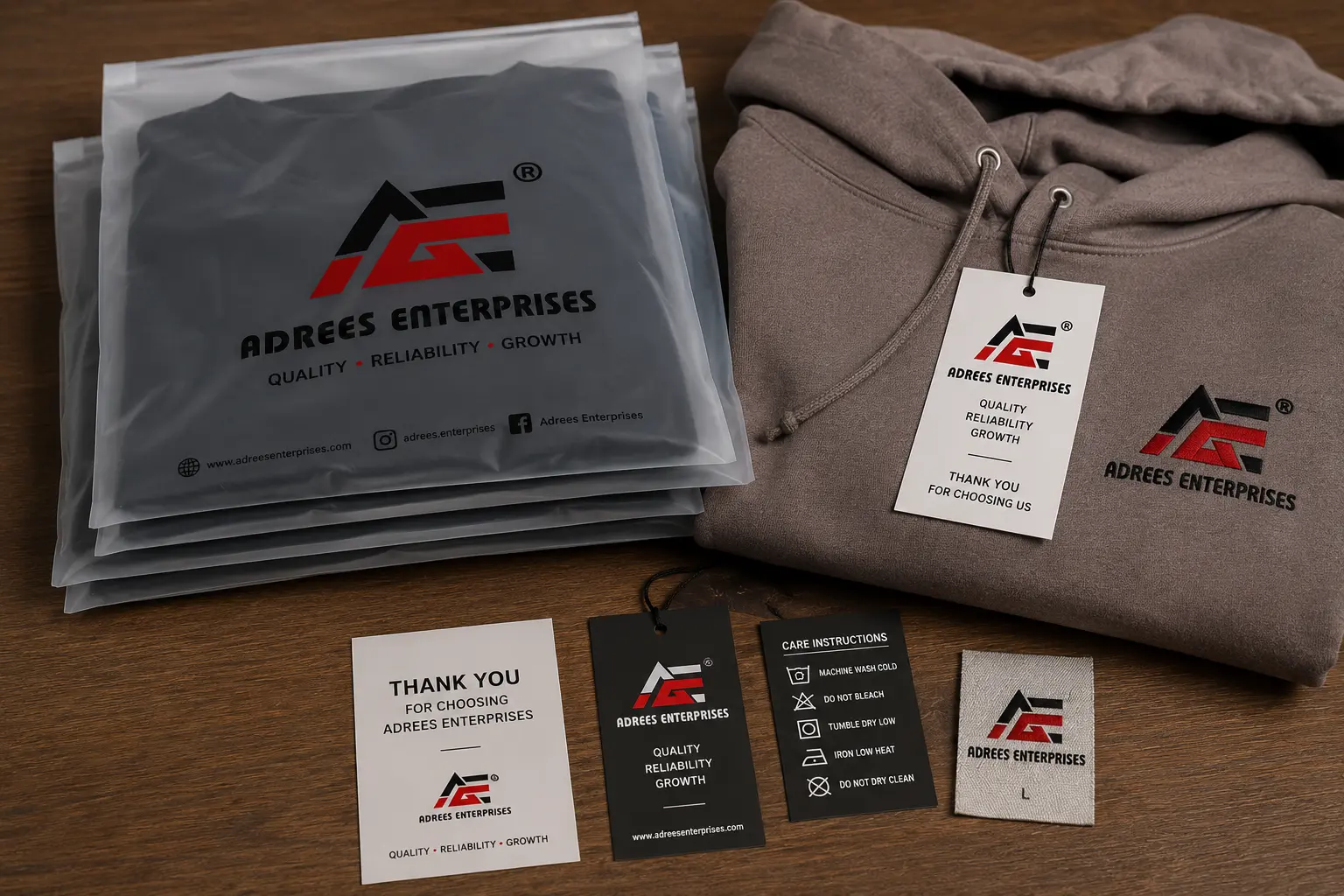
When people think about launching a clothing brand, they often focus on the garment itself. In reality, customers notice much more than the hoodie or T-shirt. They notice the experience. Small branding details can make a product feel far more premium than its manufacturing cost might suggest.
Examples include: woven neck labels, printed neck labels, custom hang tags, branded polybags, custom zippers, size labels, care labels, thank-you cards, and custom packaging.
Over the years, we’ve seen many growing brands invest in these finishing touches because they help create a stronger first impression and reinforce the brand’s identity long after the customer opens the package.
Manufacturing Is About Building a Brand—Not Just Producing Garments
One lesson we’ve learned through working with clothing brands is that successful founders rarely ask only about production. They ask about the customer. They think about: “Will this print still look good after months of wear?” “Does this packaging reflect the quality of my brand?” “Will customers want to buy from us again?”
Those questions shift the conversation from manufacturing to brand building. And in our experience, that’s where long-term success usually begins.
The 15 Biggest Mistakes New Clothing Brands Make (And How You Can Avoid Them)
Starting a clothing brand has never been easier. Building a profitable clothing brand has never been more competitive. Every year, thousands of entrepreneurs launch fashion brands with exciting ideas, creative designs, and ambitious goals. Yet many struggle—not because their products aren’t good enough, but because they make avoidable manufacturing decisions early in the process.
After working with brands at different stages of growth, we’ve noticed that the same mistakes appear repeatedly. The good news? Almost all of them can be prevented.
1. Choosing a Manufacturer Based Only on Price
This is probably the most common mistake. A quotation is important—but it shouldn’t be your decision-maker. Factories with extremely low prices may cut corners in areas you don’t immediately see, such as quality control, communication, production planning, or finishing. Instead of asking “Who is the cheapest?” ask “Who is most likely to deliver consistent quality every time?” The second question usually leads to better long-term results.
2. Skipping Proper Sample Development
Many first-time founders receive their first sample and immediately think it looks good enough. But production doesn’t work that way. A sample isn’t just there to show what the garment looks like. It’s there to test fit, construction, fabric behavior, printing quality, measurements, wash performance, and overall repeatability.
Approving a sample too quickly often means approving the same mistake hundreds of times during bulk production. Experienced founders treat sampling as the cheapest stage to make corrections.
3. Launching Too Many Products at Once
It’s tempting to launch 12 T-shirts, 8 hoodies, 5 shorts, and 4 jackets. But for most startups, that’s unnecessary complexity. A focused collection is often easier to manufacture, market, and improve. Many successful brands started with just one or two signature products before expanding.
4. Ignoring Branding Details
Customers don’t only remember the hoodie. They remember the experience. Small details like neck labels, hang tags, polybags, packaging, thank-you cards, and care labels can dramatically improve how premium your brand feels. These finishing touches often create a stronger first impression than many founders expect.
5. Expecting Instant Production
Manufacturing isn’t simply pressing a button. Fabric sourcing, sampling, approvals, cutting, stitching, decoration, finishing, quality control, and shipping all require time. Factories that promise unrealistically fast delivery without understanding your project deserve extra scrutiny. Reliable production usually begins with realistic planning.
6. Poor Communication
Most production problems begin as communication problems. Vague instructions create vague results. Providing clear measurements, reference images, artwork, color references, and branding requirements helps manufacturers understand exactly what you’re trying to build. The more detailed your information, the smoother production tends to be.
7. Forgetting About Future Growth
One question every founder should ask is: “Can this manufacturer still support me two years from now?” Changing manufacturers every time your business grows isn’t just inconvenient. It often means restarting sampling, rebuilding trust, and re-explaining your product specifications. Finding a manufacturer that can grow alongside your business is often a smarter long-term strategy.
A Simple Manufacturer Evaluation Checklist
Before placing any order, score each manufacturer honestly:
- □ Is the business registered and transparent?
- □ Can they show real production work?
- □ Do they communicate clearly?
- □ Do they provide samples?
- □ Do they explain their QC process?
- □ Can they support future growth?
- □ Do they understand your product category?
- □ Are timelines realistic?
- □ Can they customize branding and packaging?
- □ Would you trust them with your next collection?
If you answer “No” to several of these questions, it may be worth continuing your search before committing to production.
Our Perspective at Adrees Enterprises
Over the years, we’ve had the opportunity to speak with many entrepreneurs launching their first clothing brand. Interestingly, the conversations are rarely just about manufacturing. They’re about confidence. Questions like: “Am I ordering the right quantity?”
“Will the quality match the sample?”
“What if my first collection sells out?”
“Should I spend more on fabric or branding?”
Those are the kinds of questions that shape a successful brand. One thing we’ve learned is that people don’t simply need a factory. They need someone willing to explain the process, answer difficult questions honestly, and help them make informed decisions. That’s why we’ve always believed that education is just as important as manufacturing.
Whether someone chooses to work with Adrees Enterprises or another manufacturer, we genuinely hope they build a brand they’re proud of. A stronger fashion industry benefits everyone.
Final Thoughts
There isn’t one “best” clothing factory in Asia. There are excellent manufacturers in Pakistan, China, Vietnam, Bangladesh, Turkey, India, and many other countries. The real challenge is finding the one that’s the right fit for your brand.
Take your time. Ask questions. Request samples. Evaluate communication. Look beyond the quotation. Because the best manufacturing relationships aren’t built around the lowest price. They’re built around trust, consistency, and shared growth.
If you’re still comparing manufacturers or preparing to launch your first clothing collection, we hope this guide has helped you ask better questions and make more confident decisions. And if you’re ever unsure about fabrics, printing methods, production planning, or private labeling, feel free to explore more educational resources from Adrees Enterprises. We regularly share practical insights to help clothing brands make informed manufacturing decisions—whether they work with us or simply want to learn more about the industry.
