


Blog
Complete guide to custom football uniforms: design, sizing, materials, manufacturing. Low MOQ (50 pcs), fast turnaround, trusted by teams worldwide.

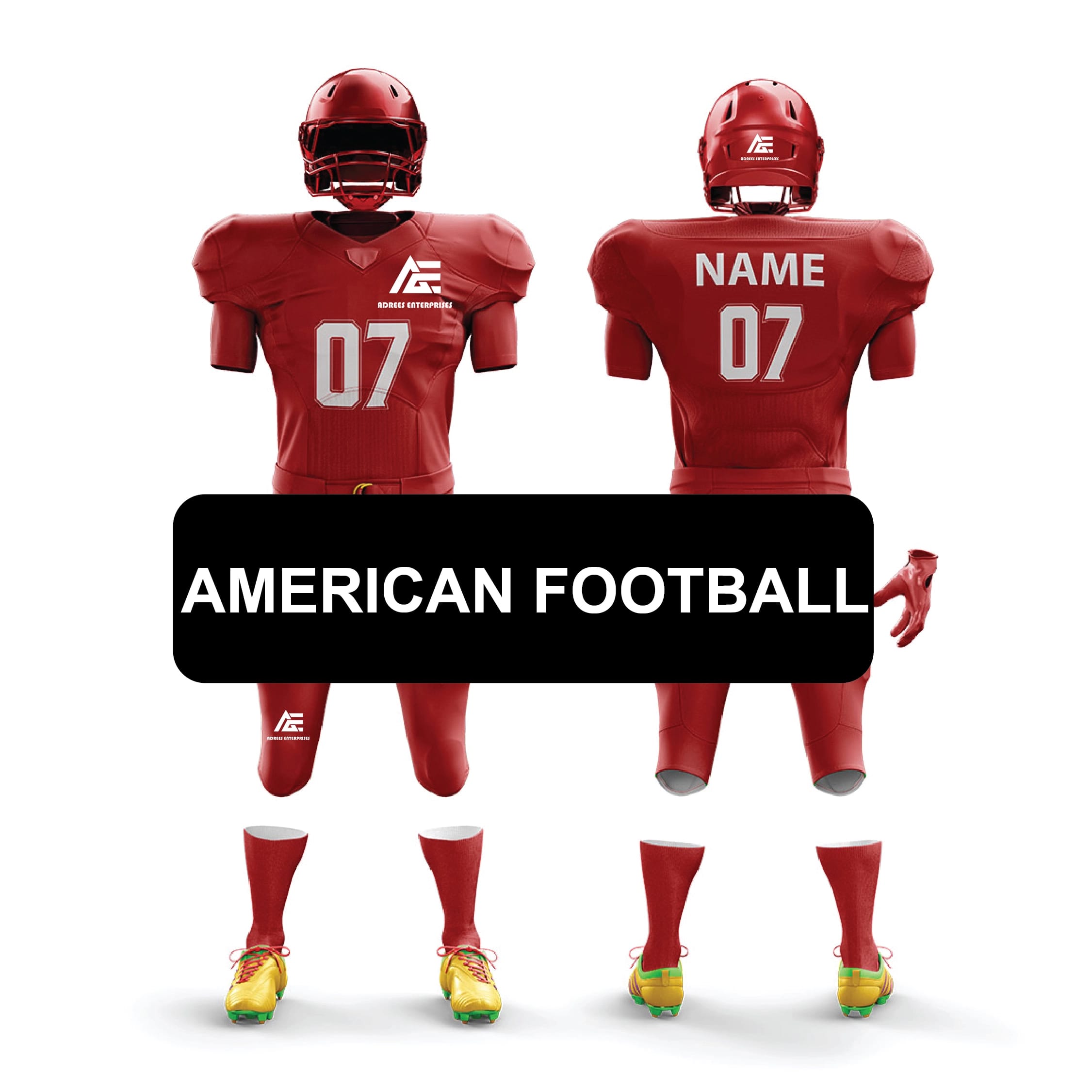
Custom American football uniforms play a critical role in team identity, performance, and player safety—especially in full-contact formats. From professional men’s leagues to the rapidly growing women’s tackle football scene, teams today demand uniforms that combine durability, comfort, precise fit, and bold visual branding. This comprehensive guide by Adrees Enterprises covers everything teams, coaches, and equipment managers need to know—from design templates and printing methods to women-specific cuts, essential uniform parts, and accurate sizing—so you can order game-ready American football kits with confidence.
Designing Custom American Football Uniforms
High-quality custom football uniforms begin with a structured design process. Most professional manufacturers follow a workflow that includes color selection, logo placement, numbering rules, fabric selection, and digital proof approval before production begins.
Modern customization allows teams to design every inch of the jersey and pants, including:
- Team colors and gradients
- Sponsor logos
- Player names and numbers
- Sleeve, side-panel, and yoke designs
This full-body customization ensures a consistent and professional team identity across home, away, and alternate uniforms.
How to Use an American Football Uniform Template
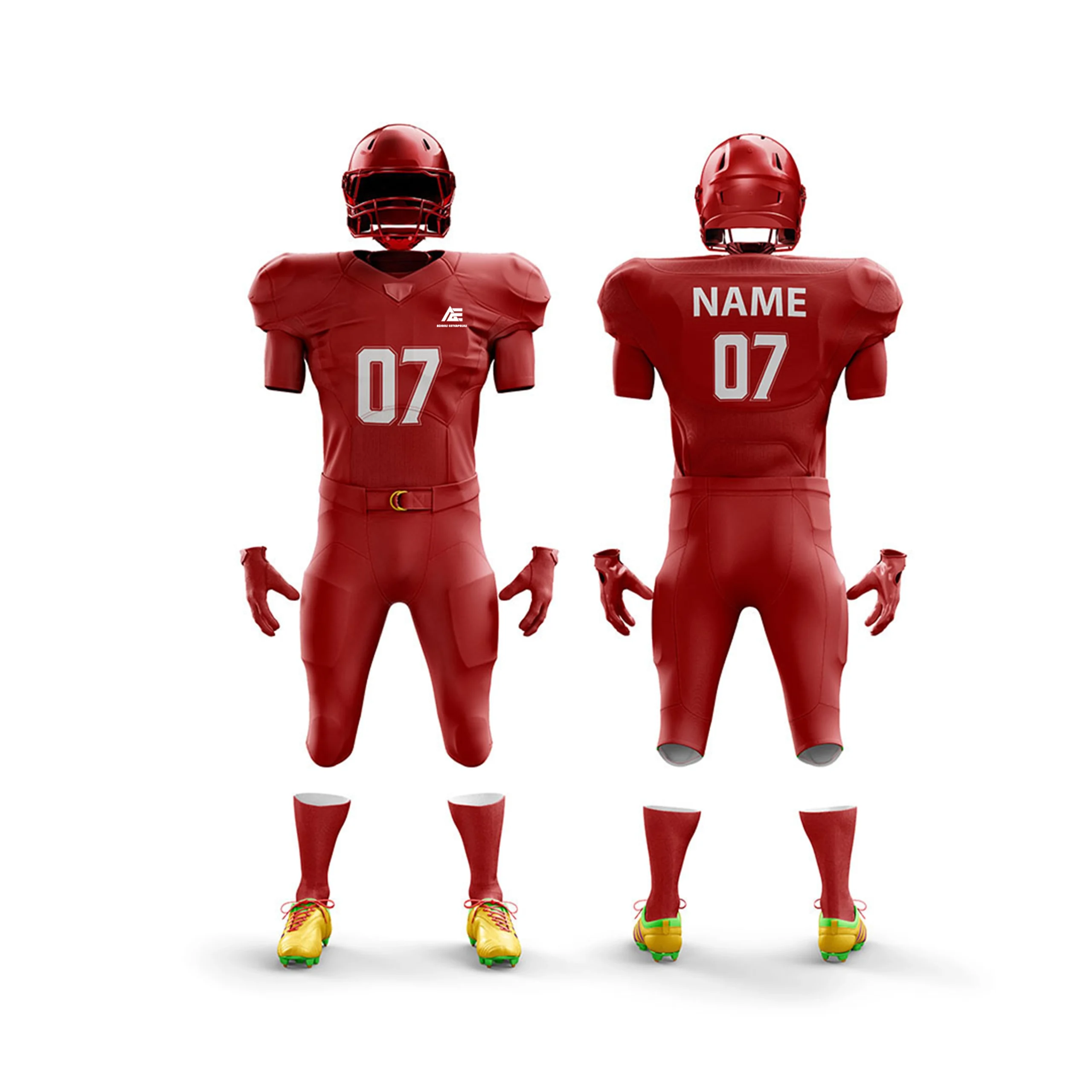
An American football uniform template is the foundation of accurate and production-safe customization.
You have to get mockups from the manufacturers in following forms:
- Vector mockups (AI / PDF formats)
- Sizing and placement guides
- Bleed and safe-zone markings
Teams or coaches Also Get Free American Football uniform From Our Website of Adrees Enterprises which you can typically download in different forms like Corel Draw format, Adobe Illustrator format, Portable document format (PDF) blank football jersey and pants template, then place artwork into separate layers for:
- Front & back body
- Sleeves
- Side panels
- Collar and trim
These templates ensure logos, numbers, and stripes stay aligned and compliant with league regulations. Many suppliers also offer 3D configurators so teams can preview designs on a realistic player model before final approval.
Sublimation vs. Screen Printing for Football Jerseys
Choosing the right printing method is essential for tackle football, where uniforms endure heavy contact, stretching, and repeated washing.
Sublimation Printing
- Ink is fused directly into polyester fibers
- Extremely durable (won’t crack, peel, or fade)
- Allows unlimited colors, gradients, and complex patterns
- Lightweight and breathable
- Ideal for professional and women’s tackle football
Screen Printing
- Ink sits on top of fabric
- Best for simple, bold designs
- Heavier feel and reduced breathability
- Can crack over time under high impact
For modern American football uniforms—especially women’s kits—sublimation is the industry standard due to durability and design freedom.
Choosing the Right Fabric: Breathability & Durability
Picking the right fabric is the single most important technical decision when building game-ready American football uniforms. The correct fabric combo balances breathability, moisture control, abrasion resistance, stretch for mobility, and long-term durability — and it should match the team’s level of play (youth, amateur, tackle league, or pro).
What most manufacturers (and pro teams) use:
Modern tackle football kits are overwhelmingly built from polyester performance fabrics: moisture-wicking polyester meshes for the body, shiny dazzle (polyester) panels on shoulders/yokes for abrasion and style, and polyester–spandex (elastane) blends in panels or compression layers where stretch is needed. For heavy-wear areas (pants thighs, seat, shoulder yoke) factories will step up denier or use ripstop constructions to resist tearing.
Recommended fabric choices (practical guide you can use on product pages or when ordering)
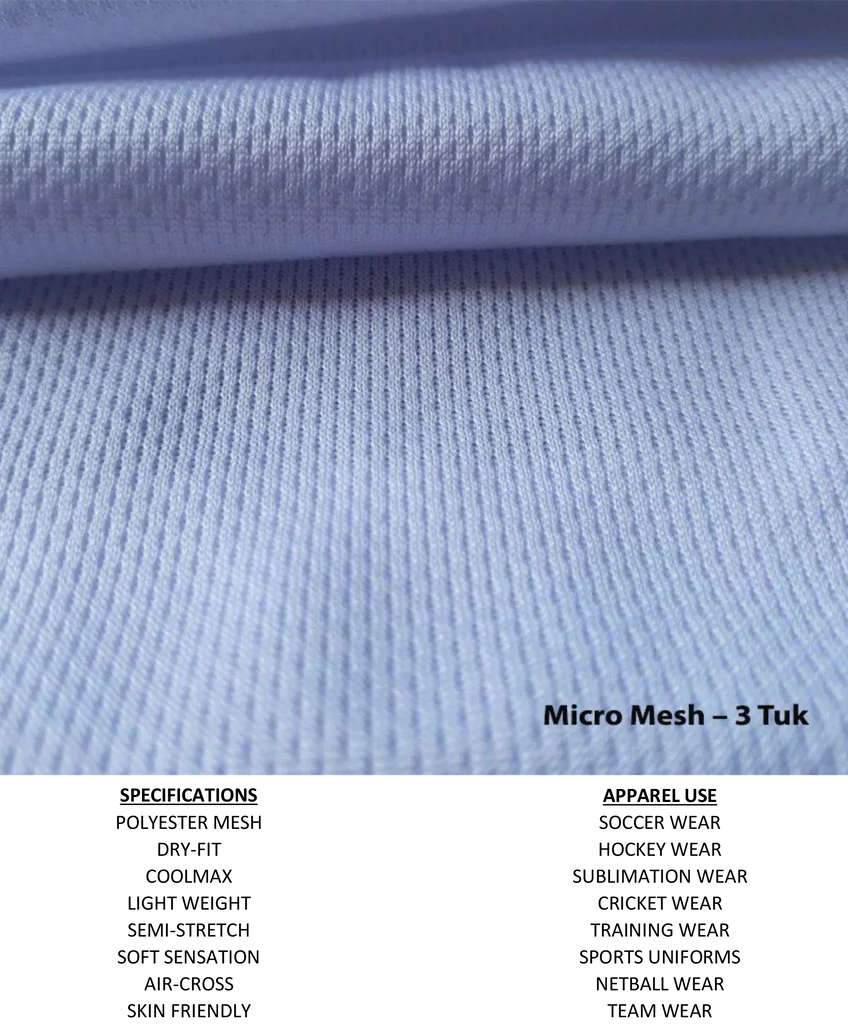
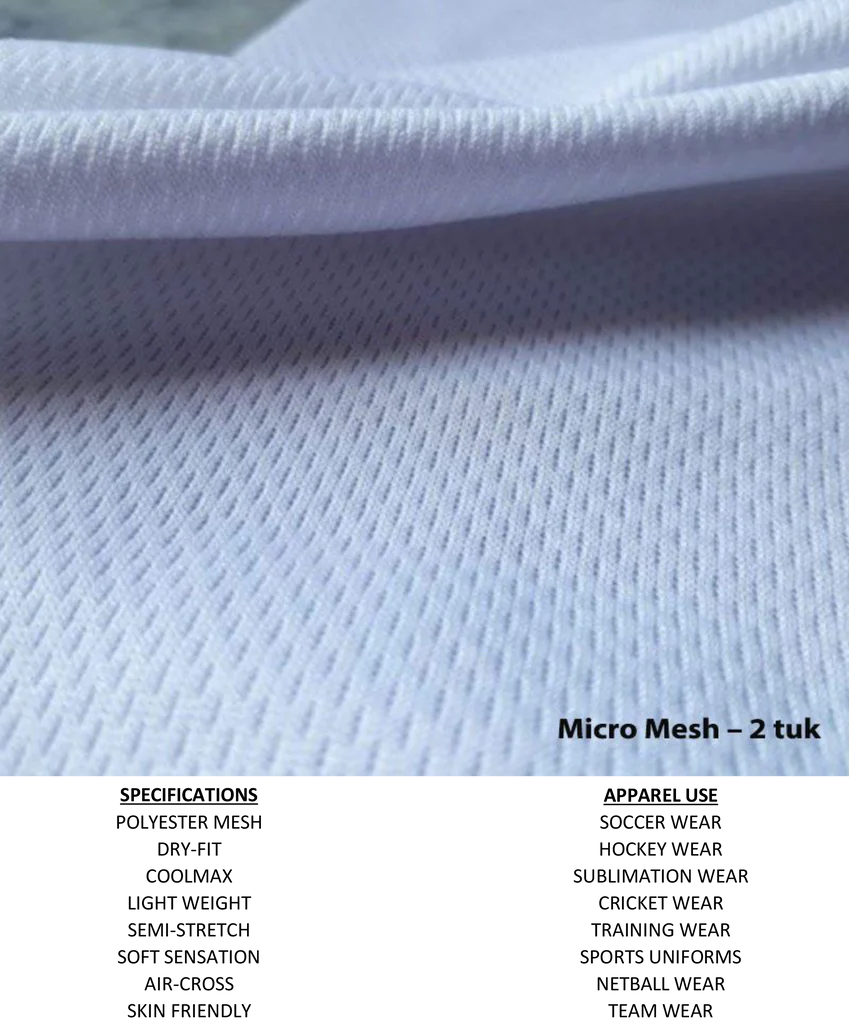
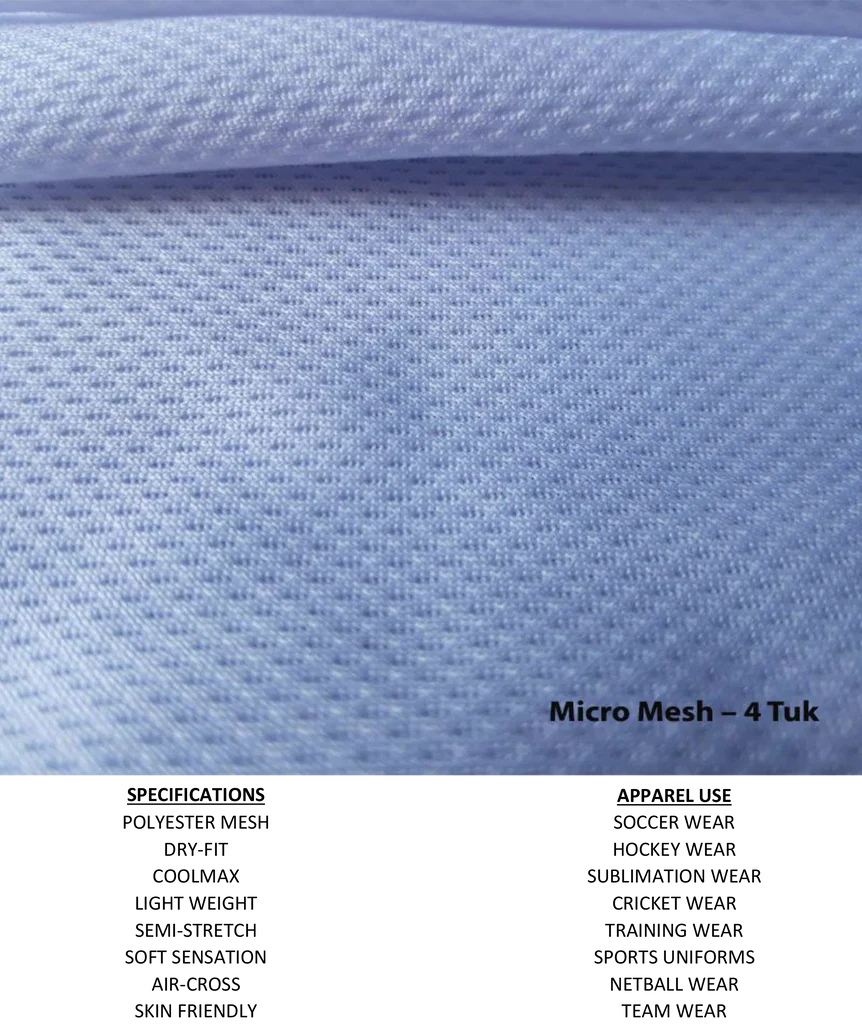
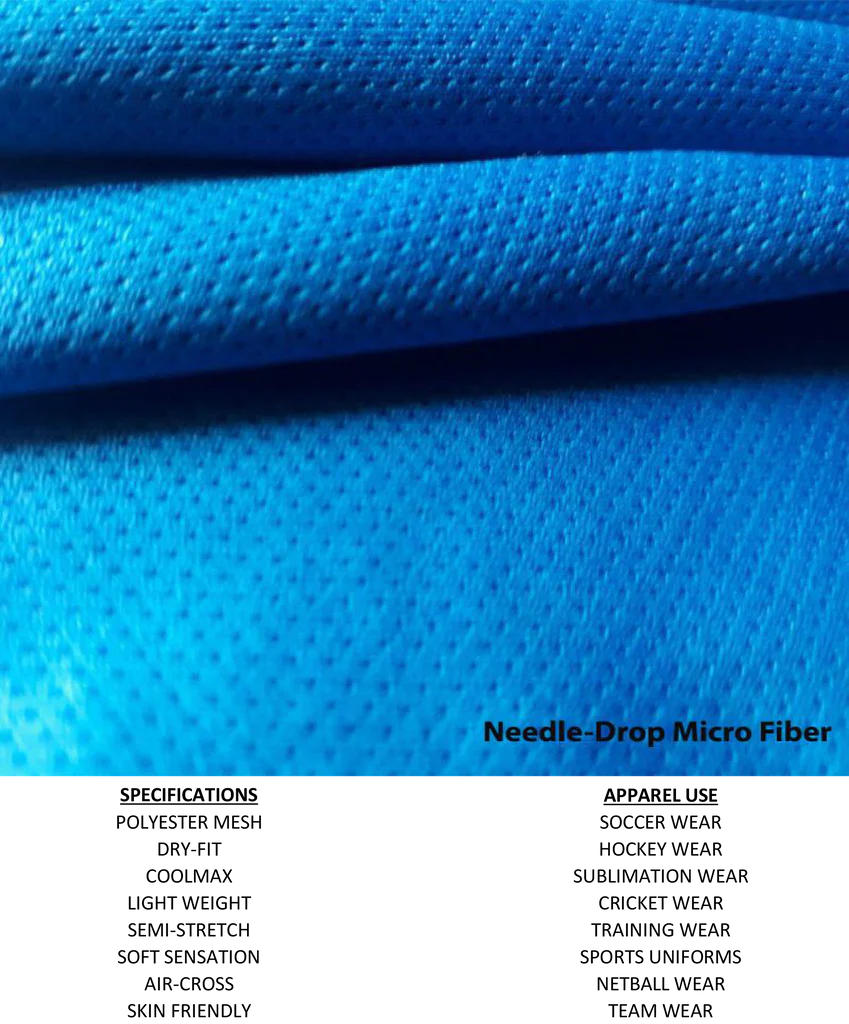
1) Main body — Moisture-wicking polyester mesh (recommended)
- Why: Pulls sweat away, dries fast, and stays light under pads. Best for game-day jerseys where breathability matters.
- Typical composition: 100% polyester or polyester performance knit.
- GSM range to request: 120–200 gsm (lower for replica/fan wear; 160–200 gsm for competitive tackle kits).
- Note: Use heavier mesh (higher denier) for colder climates or elite pro kits.
Shoulder / yoke — Dazzle cloth (accent + abrasion resistance)
- Why: Dazzle gives a glossy pro look and holds up to shoulder-pad abrasion; commonly used as inserts or yoke panels.
- Tradeoff: Dazzle is less breathable than mesh — pair it with perforated or mesh zones in the torso so players don’t overheat.
Typical spec: Polyester dazzle, 70–150 denier depending on sheen and strength.
Stretch / mobility panels — Polyester–Spandex blends (compression & fit areas)
- Why: Adds 2-way or 4-way stretch at the sides, underarms, and collar so the jersey moves with the player and sits well over pads.
- Composition: 80–90% polyester + 5–20% spandex/elastane (brands vary).
Use this for women’s cuts where closer, athletic fits improve comfort and reduce “bunching.”
Pants & high-impact zones — Reinforced high-denier fabric or ripstop
- Why: Thighs, hips and seat receive repeated abrasion from pads and turf. Reinforced fabrics or ripstop constructions prevent early wear.
Suggested GSM / denier: 200–360 gsm for pants material; consider ripstop weave or heavy-duty polyester blends for pro/college kits.
Women’s specific recommendations
- Use slightly lighter-weight mesh in the torso with strategic spandex panels at the sides and lower back to keep the jersey close to the body without restricting movement.
Shorter jersey length and refined sleeve/neck patterns minimize fabric bunching over pads—so your fabric choices should favour stretch and recovery (poly/spandex blends) in sizing ranges XS–XL.
Quick pros & cons — fabric features at a glance
- Moisture-wicking polyester mesh: + Breathable, lightweight, durable; – Can feel thin at very low GSM.
- Dazzle polyester: + Durable, glossy finish, abrasion-resistant; – Less breathable — use sparingly.
- Poly/spandex panels: + Mobility and better fit (esp. women’s); – Slightly higher cost and needs careful grading.
- Ripstop/heavy-denier zones: + Tear resistance where you need it; – Heavier, so place only in impact zones.
Practical ordering checklist (so teams order the right kit)
- Ask suppliers for GSM and denier specs of each fabric zone (body, yoke, panels).
- Request sample swatches of mesh, dazzle, and poly/spandex panels before signoff.
- For tackle football, prioritize sublimated 100% polyester bodies with reinforced pants—this combo gives the best longevity and design freedom.
Strategic fabric zoning improves airflow, reduces overheating, and supports explosive movement—critical for competitive play.
Women’s American Football Uniforms: Fit & Performance
Women’s American football is one of the fastest-growing segments in the sport, creating strong demand for women’s American football uniforms engineered specifically for female athletes—not downsized men’s cuts.
Dedicated women’s sizing improves:
- Mobility
- Comfort over pads
- Visual confidence
On-field focus
Key Differences Between Men’s and Women’s Cuts
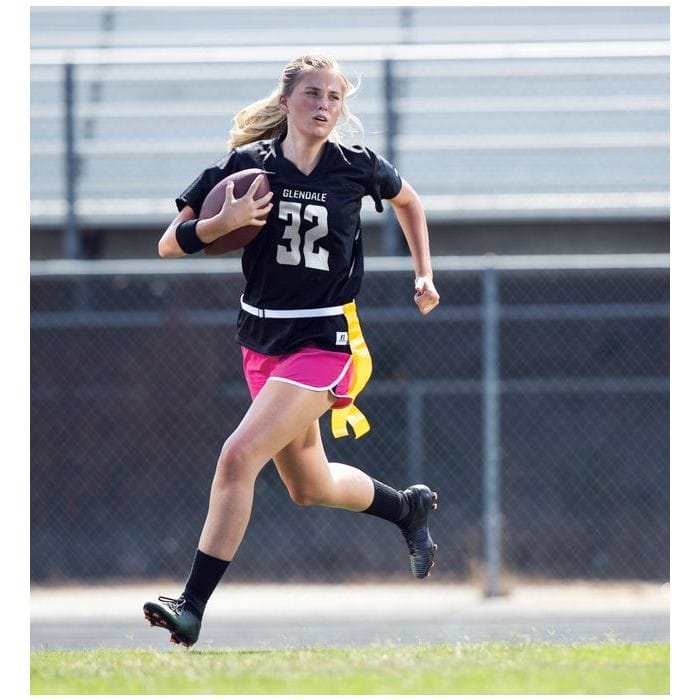
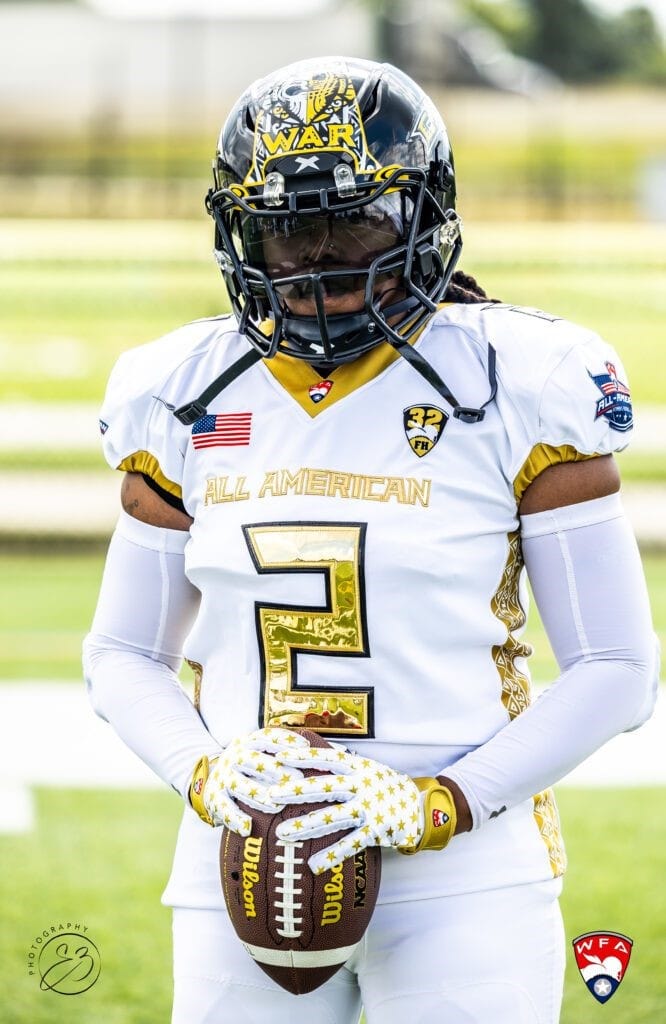
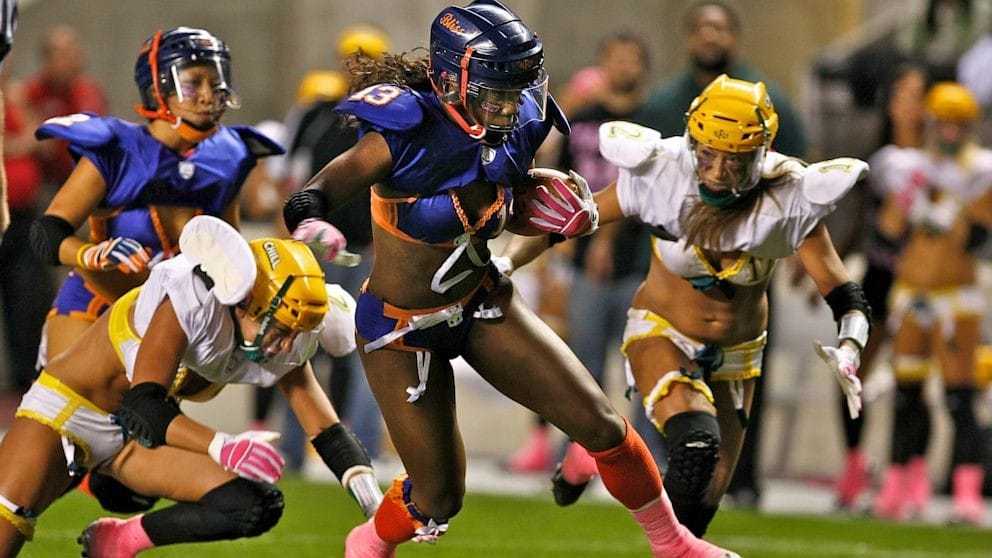
Women’s American football uniforms are designed to address anatomical differences, including:
- Narrower shoulders
- Shaped bust and waist contours
- Slightly shorter jersey lengths to prevent bunching
- Adjusted pant rise, hips, and thigh measurements
Sleeves, neck openings, and torso grading are refined to reduce chafing and keep the jersey properly seated over shoulder pads during contact.
Top Trends in Women’s Football Gear
The rise of women’s tackle leagues has driven demand for female American football uniforms that match men’s pro-level performance while maintaining proper fit.
Current trends include:
- Bold sublimated designs
- Alternate colorways for special events
- Compression-style jerseys
- Position-specific cuts
- Unified branding across men’s and women’s teams
Many women’s lines now mirror professional men’s styling while using women-specific grading and size ranges (XS–4XL).
Essential American Football Uniform Parts Checklist
A complete American football uniform consists of multiple components that must integrate smoothly with protective equipment.
Jersey
- Heavy-duty polyester
- Mesh or solid body options
- Reinforced shoulders
Pants
- Integrated padded pants or slotted pad pockets
- Compatible with hip, thigh, knee, and tailbone pads
Socks & Accessories
- Coordinated socks
- Gloves for grip
- Towels and optional visors for glare control
Protective Gear Requirements (NFL vs. Youth Rules)
Protective gear typically includes:
- Helmet
- Shoulder pads
- Hip, thigh, knee, and tailbone pads
Youth and high-school leagues often have stricter rules regarding:
- Number size and placement
- Logo visibility
- Mandatory padding
Uniform designs must allow adequate space for compliant numbering and markings. Professional manufacturers usually provide league-specific decoration guidelines to ensure compliance.
Sizing & Ordering Guide for Teams
Accurate sizing is critical for performance and safety. Most suppliers provide separate American football uniform size charts for youth, women, and men.
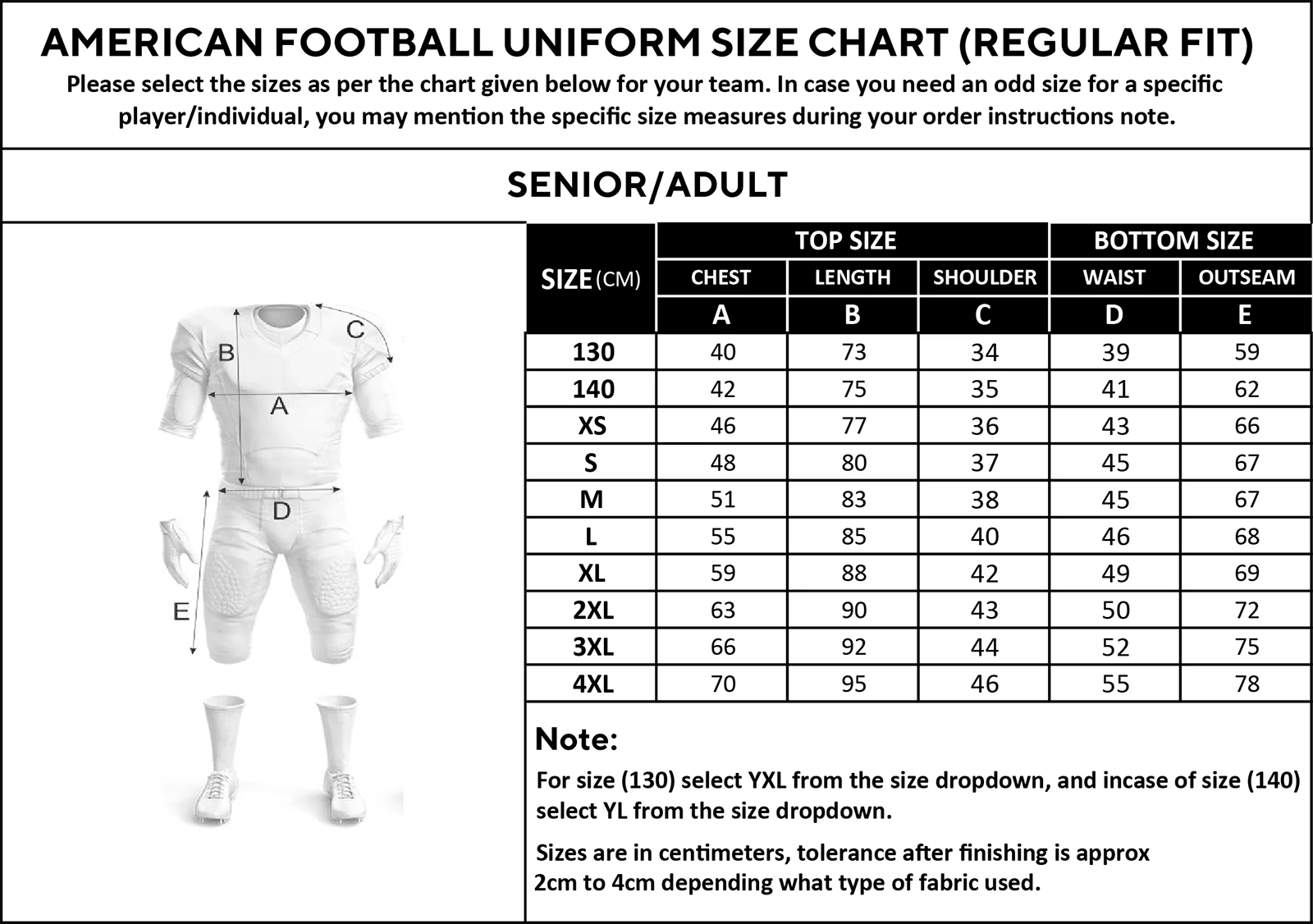
How to Measure for the Perfect Fit
- Chest: Measure around the fullest part, tape snug and level
- Waist: Measure where the pant waistband will sit
- Hips/Seat: Measure the fullest part to accommodate pads
- Inseam: Measure from inner leg to desired pant length
Measuring over light clothing (not bulky layers) ensures accuracy.
Bulk Ordering Tips for Teams
- Start with a sample or small initial order to confirm fit
- Lock in design files and color codes for future reorders
- Standardize styles across rosters
- Take advantage of tiered pricing on bulk orders
Many manufacturers offer free design support and waived setup fees for team orders, helping clubs control costs without sacrificing quality.

One thought on “Complete guide to custom football uniforms: design, sizing, materials, manufacturing. Low MOQ (50 pcs), fast turnaround, trusted by teams worldwide.”