

Blog
GOTS Certified Clothing Manufacturer Pakistan: Complete Guide 2026

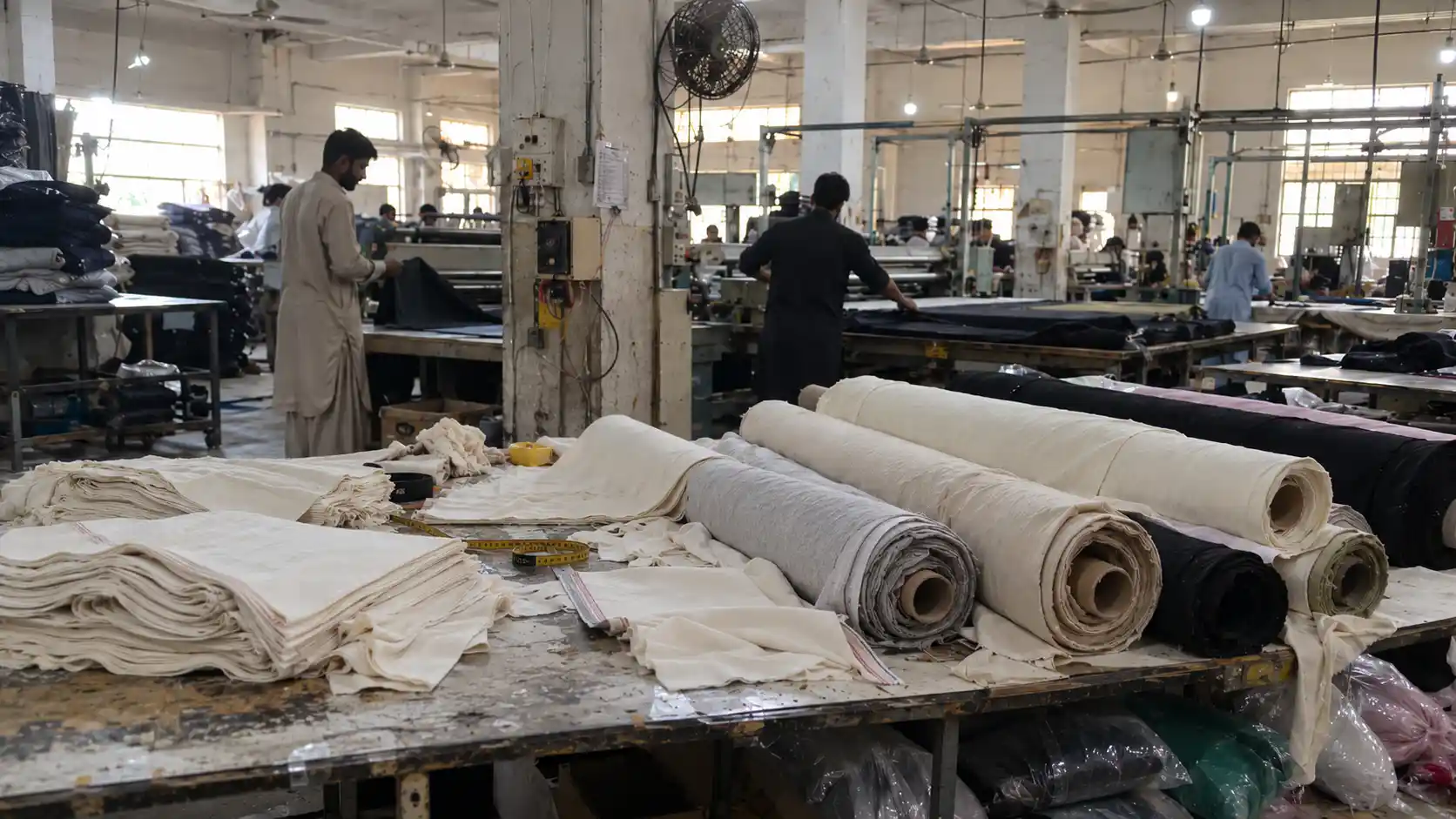
Choosing the right GOTS-certified clothing manufacturer in Pakistan is critical for brands prioritizing sustainable, organic textiles. With the global organic clothing market projected to reach $12 billion by 2027, buyers need manufacturers who hold verifiable certifications—not just claims.
Adrees Enterprises is a GOTS Scope Certificate holder based in Sialkot, Pakistan, specializing in bulk production for established US/UK brands ordering 500+ units per style. Unlike competitors making unverified sustainability claims, we provide documented certification evidence and transparent supply chain practices.
This guide covers what GOTS certification means, why it matters for B2B buyers, and how to verify manufacturer credentials before placing orders.
What is GOTS Certification?
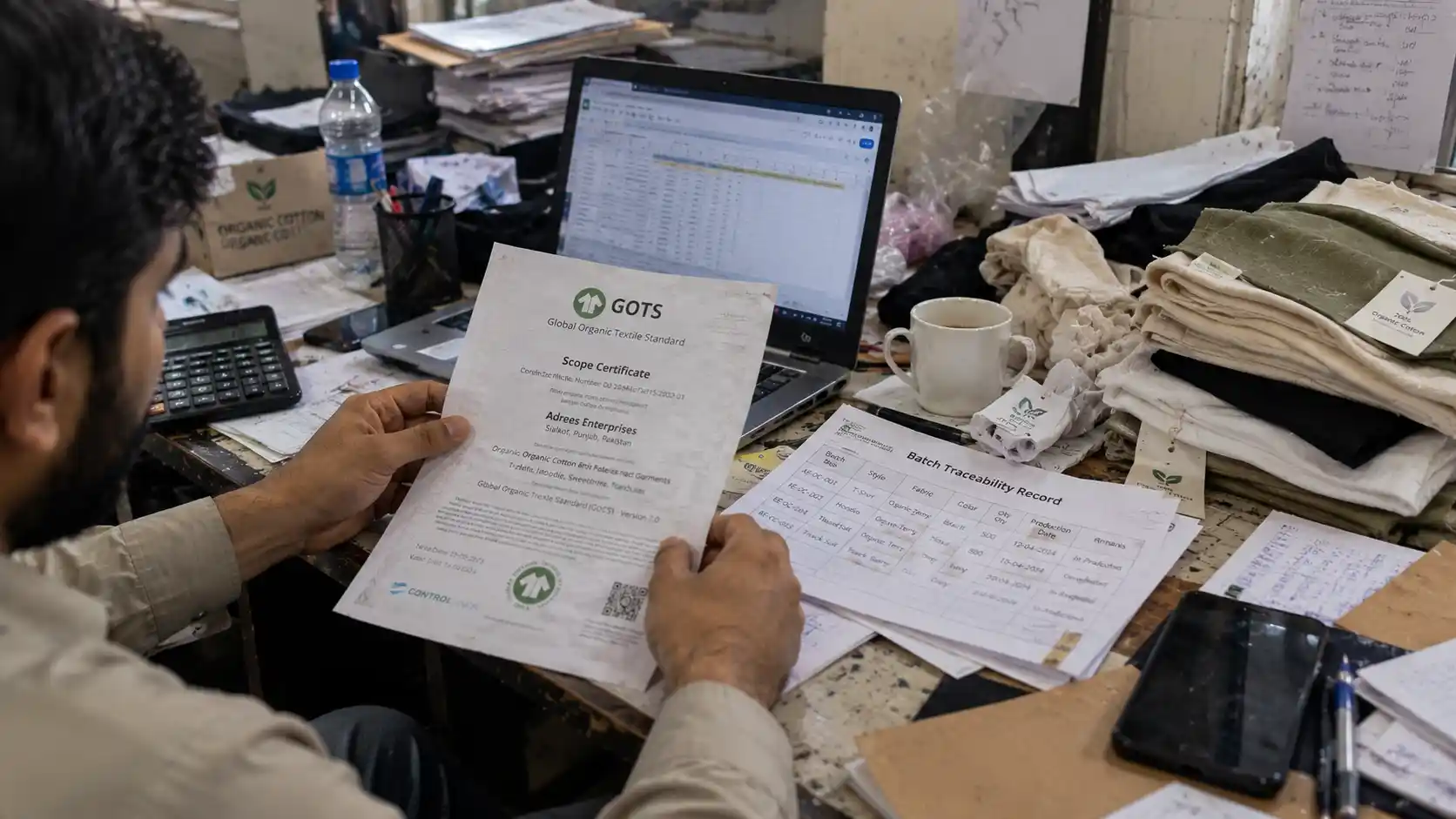
Global Organic Textile Standard (GOTS) is the world’s leading certification for organic fibers. It ensures textiles are made with:
- Organic fibers (minimum 70% organic content)
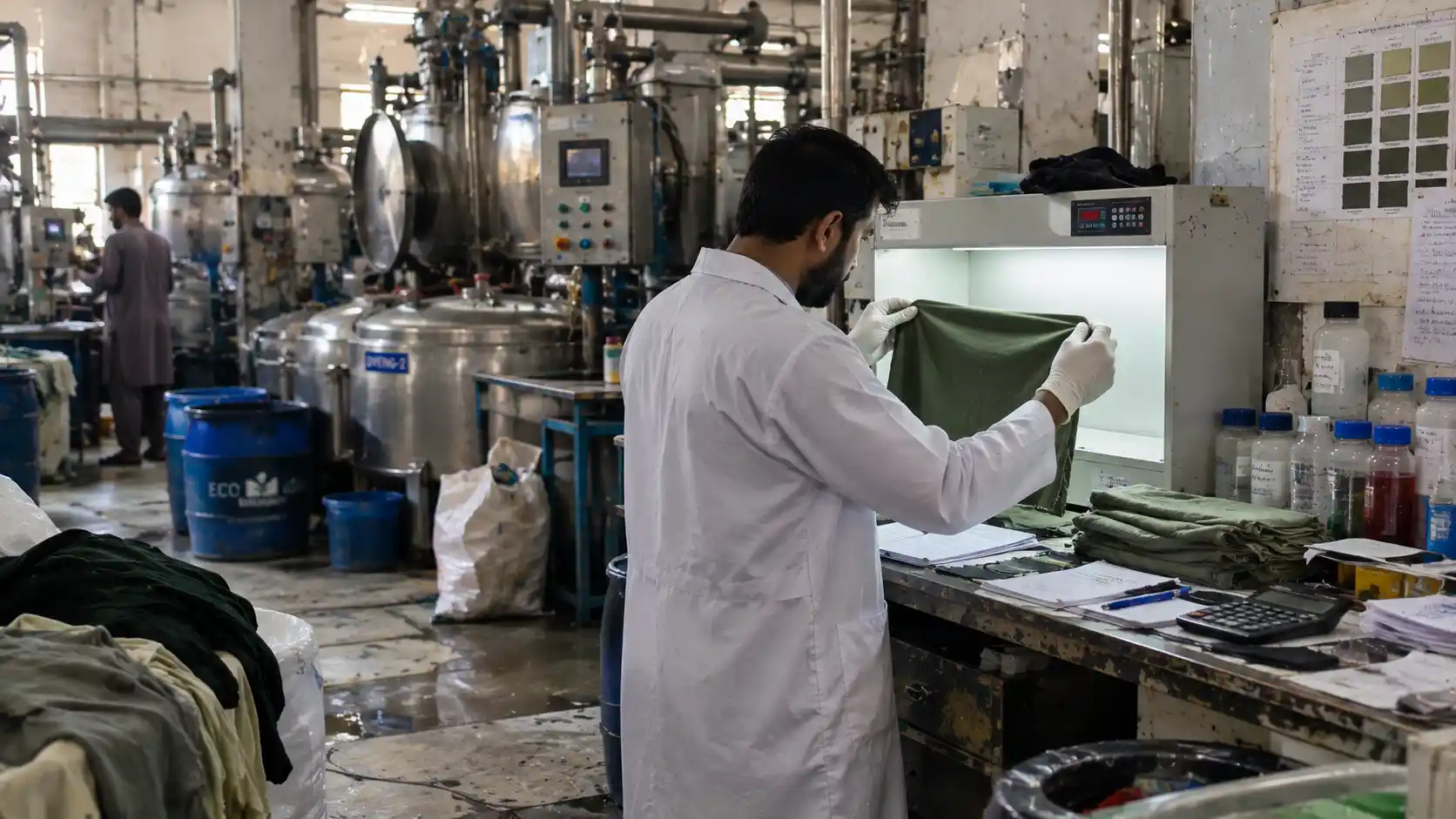
- Restricted chemical inputs (no toxic dyes, bleaches, or finishing agents)
- Social compliance (safe working conditions, fair wages, no child labor)
- Environmental management (wastewater treatment, energy efficiency)
- Traceability (from farm to final product)
GOTS Certification Levels
| Certification Level | Organic Content Requirement | Label Use |
|---|---|---|
| GOTS Gold | ≥95% organic fibers | “Certified Organic” |
| GOTS Silver | ≥70% organic fibers | “Made with Organic Materials” |
| GOTS Blended | <70% organic | Limited labeling options |
Most B2B buyers require GOTS Gold certification for their product lines.
Why GOTS Certification Matters for B2B Buyers
1. EU Market Access Requirements
The European Union is tightening textile regulations:
- EU Strategy for Sustainable and Circular Textiles (2022)
- Digital Product Passport (DPP) required by 2027-2028
- Restriction of Hazardous Substances (REACH) compliance mandatory
- ESPR (Ecodesign for Sustainable Products Regulation) incoming
GOTS certification provides the foundational compliance framework for these regulations. Manufacturers without GOTS will face barriers accessing EU buyers.
2. Brand Positioning & Consumer Demand
Organic apparel commands premium pricing:
- 68% of consumers willing to pay more for sustainable products (McKinsey 2025)
- Private label organic activewear growing at 12% CAGR
- Certification transparency increasingly required by retailers
3. Risk Mitigation
Verified GOTS certification protects brands from:
- Greenwashing accusations (FTC guidelines enforcement increasing)
- Supply chain disruptions (certified factories have better traceability)
- Quality inconsistencies (GOTS requires standardized testing protocols)
GOTS vs. Other Certifications: What Buyers Should Know
Not all “eco-friendly” claims mean the same thing. Here’s how GOTS compares:
| Certification | Focus | Chemical Requirements | Social Compliance | Traceability |
|---|---|---|---|---|
| GOTS | Organic fibers + processing | Strictly restricted list | Mandatory (ILO standards) | Full chain of custody |
| OEKO-TEX Standard 100 | Product safety testing | Tested for harmful substances | Not required | Final product only |
| GRS (Global Recycled Standard) | Recycled content | Restricted chemicals | Social criteria required | Recycled material traceability |
| BSCI | Social compliance only | Not addressed | Audit-based assessment | No material traceability |
Key Insight: GOTS is the only certification requiring both organic fiber verification AND comprehensive social/environmental criteria. Competitors often claim OEKO-TEX “compliant inks” while lacking facility-level GOTS certification.
GOTS v8.0: What Changes in 2027
GOTS version 8.0 takes effect March 2027, with significant updates:
Major Updates
| Area | v7.0 Requirements | v8.0 Requirements |
|---|---|---|
| Due Diligence | Recommended | Mandatory (OECD-aligned) |
| Climate Criteria | Not addressed | Scope 1 & 2 GHG inventory required |
| PFAS Controls | General restrictions | Tighter limits, updated testing |
| Microfiber Monitoring | Not addressed | Risk-based measures for fiber release |
| Durability Testing | Standard wash tests | Expanded 5-wash standard |
| Human Rights | Social criteria | Strengthened internal audit requirements |
| Circularity | Product lifecycle considerations | Products certified across repair/resale models |
What This Means for Buyers
Manufacturers transitioning to v8.0 now have a 12-month window. Early adopters will:
- Avoid rushed compliance during peak production periods
- Have documented transition processes ready
- Meet stricter buyer requirements proactively
Adrees Position: As an existing GOTS certificate holder, we’re monitoring v8.0 requirements and preparing transition documentation ahead of the March 2027 deadline.
How to Verify GOTS Certification Claims
Many manufacturers claim certification without documentation. Here’s how to verify:
Step 1: Request Scope Certificate
Ask for the GOTS Scope Certificate issued to the manufacturing facility. This document shows:
- Certificate holder name and address
- Certificate number (valid for 1 year)
- Issuing certifier body
- Validity dates
- Authorized product categories
Step 2: Check Certificate Database
Verify certificates through official databases:
- GOTS Database: www.global-standard.org
- ICIA (India): For Indian suppliers
- Control Union: International certifier
- IMO (Institute for Marketecology): Swiss certifier
Step 3: Request Transaction Certificates
For each shipment, request Transaction Certificates (TCs). These document:
- Specific products shipped
- Quantities
- Buyer/seller information
- Certification status of each transaction
Step 4: Audit Documentation
For large orders, conduct or commission facility audits reviewing:
- Chemical input inventory
- Wastewater treatment records
- Worker interview protocols
- Organic fiber storage and processing segregation
Questions to Ask Your GOTS Manufacturer
Before signing contracts, verify these critical points:
Certification Verification
“Can you show your current GOTS Scope Certificate?”
- Check validity dates (must be current)
- Verify certificate number in GOTS database
- Confirm facility address matches production location
“Which certifier body issued your certificate?”
- Reputable bodies: IMO, Control Union, Ecocert, CCOF
- Avoid certificates from unknown or obscure issuers
“Do you provide Transaction Certificates with each shipment?”
- Required for EU customs documentation
- Needed for brand sustainability reporting
Production Capabilities
“What’s your actual MOQ, and does it apply per style or per color?”
- Adrees: 500 pieces per style, any color combination
- Competitors often quote 20-50 pcs but apply per color
“Can you handle GOTS-compliant fabric sourcing?”
- Organic cotton, hemp, linen requirements
- Supplier verification and documentation
“How do you ensure organic fiber segregation during production?”
- Separate storage areas
- Dedicated production lines or scheduled batches
- Cleaning protocols between organic/conventional runs
Quality & Compliance
“What’s your QC process for GOTS compliance?”
- Incoming fabric testing
- In-production checks
- Final product verification
“Do you maintain chemical input lists compliant with GOTS requirements?”
- Approved inputs only
- Regular audits of dye house and finishing processes
“Can you provide documentation for EU DPP (Digital Product Passport) requirements?”
- Material composition records
- Certification traceability
- Environmental footprint data
Red Flags: When Certification Claims Are Suspicious
Watch for these warning signs:
❌ Vague Language
- “Eco-friendly manufacturing”
- “Sustainable practices”
- “Organic options available” (without certification)
❌ Missing Documentation
- Refusal to show certificates
- Certificates from unknown issuers
- Expired or unverifiable documents
❌ MOQ Mismatches
- Claiming GOTS certification but targeting 20-50 piece MOQs
- Small-batch producers rarely maintain full GOTS chain of custody
❌ No Transaction Certificates
- Bulk manufacturers must provide TCs for each shipment
- Absence suggests fragmented or brokered supply chains
✅ Verified Approach
- Current GOTS Scope Certificate displayed
- Transaction Certificates provided per shipment
- 500+ unit MOQ aligns with serious B2B operations
- Clear documentation of supply chain partners
Adrees Enterprises: GOTS Certified Manufacturing in Sialkot
Our Certification Profile
| Certification | Status | Details |
|---|---|---|
| GOTS | ✅ Certified | Scope Certificate holder; organic fiber processing |
| FBR | ✅ Registered | Pakistan tax authority registration |
| SCCI | ✅ Member | Sialkot Chamber of Commerce & Industry |
| CE | ✅ Certified | Conformité Européenne marking |
Our Production Standards
- 500+ units per style — Designed for established brands, not startup experiments
- Dedicated account management — Single point of contact throughout production
- Full documentation — Certificates, TCs, and compliance records provided
- Sample-to-bulk consistency — PP sample approval process with written specifications
Our Service Scope
| Product Category | Capabilities |
|---|---|
| Activewear | Leggings, sports bras, gym shorts, tracksuits |
| Sportswear | Team uniforms, performance jerseys, compression wear |
| Outerwear | Hoodies, jackets, windbreakers |
| Loungewear | Organic cotton basics, casual wear |
Ready to Work with a Verified GOTS Manufacturer?
Next Steps:
- Request our GOTS Scope Certificate and recent Transaction Certificates
- Schedule a video call to discuss your product requirements
- Review our compliance documentation for EU DPP readiness
- Get a quote for your 500+ unit order
Frequently Asked Questions
Q: Can you certify my factory if we’re not currently GOTS certified?
A: We can guide you through the certification process, which typically takes 3-6 months depending on facility readiness. GOTS certification requires:
- Facility audit by approved certifier
- Chemical input screening
- Organic fiber sourcing agreements
- Documentation systems implementation
Q: What’s the difference between GOTS Gold and Silver certification?
A:
- GOTS Gold: Products contain ≥95% organic fibers, can use “Certified Organic” label
- GOTS Silver: Products contain ≥70% organic fibers, labeled “Made with Organic Materials”
Both require full social and environmental compliance.
Q: How do I verify a manufacturer’s GOTS certificate?
A: Request the Scope Certificate number and check it in the GOTS Database. Verify:
- Certificate holder name matches facility
- Certificate is current (valid for 1 year)
- Issuing body is recognized
- Product categories covered match your needs
Q: Will GOTS v8.0 affect my existing orders?
A: Orders placed before March 2027 can typically continue under v7.0 requirements. However, new orders after the effective date may require v8.0 compliance. Plan accordingly.
Q: Do you handle fabric sourcing for GOTS-certified products?
A: Yes. We source GOTS-certified organic cotton, hemp, and blended fabrics from verified suppliers. All fabric certificates and Transaction Certificates are provided with orders.
Q: What’s included in your compliance documentation package?
A: Each order includes:
- GOTS Scope Certificate copy
- Transaction Certificate for shipment
- Fabric certification documents
- Chemical input compliance statements
- QC inspection reports
Internal Links
- /manufacturing/ — Production process and capabilities
- /about-us/ — Company history and team
Last updated: October 19, 2026
